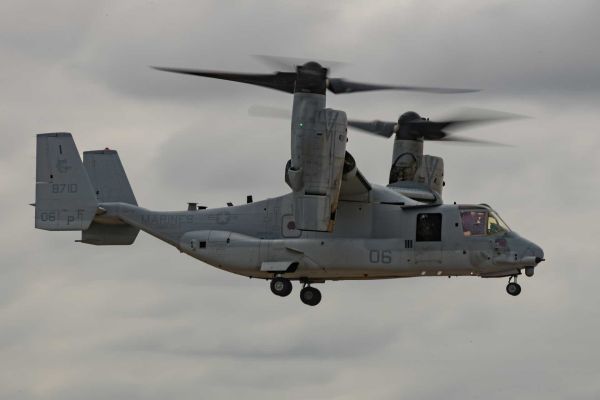
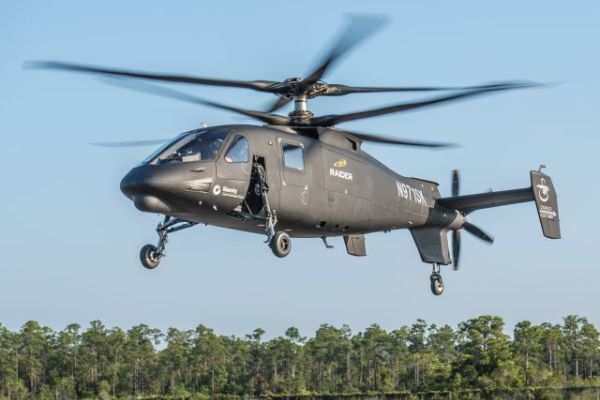
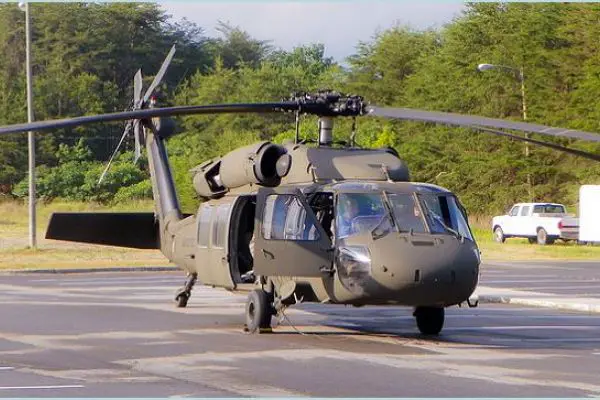
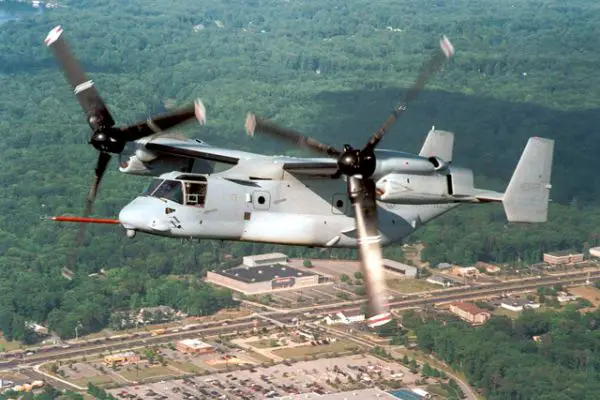
The MV-75 is a next-generation military tiltrotor aircraft developed by Bell Textron in the United States for the U.S. Army’s Future Long-Range Assault Aircraft (FLRAA) program. It is designed to replace legacy platforms such as the UH-60 Black Hawk by delivering superior range, speed, and operational flexibility for assault and utility missions across multi-domain environments.
Country users: United States






Technical Data
-
Design
The MV-75’s design features a tiltrotor configuration with two large-diameter, three-bladed proprotors mounted at the ends of a high-mounted straight wing. Each rotor measures approximately 9.7 meters (32 feet) in diameter, providing the lift necessary for vertical take-off and hover operations. The engines are housed in fixed nacelles, and only the proprotors and gearbox assemblies tilt, simplifying the mechanical system compared to the V-22 Osprey. This design minimizes weight, enhances reliability, and reduces maintenance requirements.
The airframe, primarily constructed from carbon-fiber composite materials, supports a lightweight yet robust structure with a maximum take-off weight of around 13,600 kilograms (30,000 pounds). The fuselage length is approximately 15.4 meters (50.5 feet), with an overall aircraft height of around 7 meters (23 feet), allowing the platform to fit within operational constraints for expeditionary deployments. The retractable tricycle landing gear ensures low drag during high-speed cruise, and the V-tail configuration optimizes stability and aerodynamic control. The internal cabin is designed to carry a full infantry squad with mission equipment, accessed through dual side cargo doors. A critical design feature is the cross-wing driveshaft system, allowing power to be transferred between rotors, enabling one engine to drive both rotors in the event of engine failure—greatly increasing survivability in combat environments.
-
Armament
While not a dedicated attack aircraft, the MV-75 offers modular armament configurations based on mission requirements. The baseline model includes provisions for side-mounted 7.62mm M240 or .50-cal GAU-17/A machine guns to provide suppressive fire during troop insertion and extraction. Future configurations may include pylons for guided rockets, air-launched effects (ALEs), electronic warfare pods, or modular weapon kits, particularly for special operations forces or operations in high-threat zones.
-
Engine
The MV-75 is powered by two Rolls-Royce AE 1107F turboshaft engines, each delivering over 6,000 shaft horsepower. These engines are optimized for high-altitude and high-temperature operations, ensuring robust performance across a range of mission environments. The propulsion system enables the aircraft to achieve a cruise speed of approximately 280 knots (520 km/h) and a top speed exceeding 300 knots (556 km/h), significantly outpacing traditional rotary-wing platforms.
Each engine powers one of the wing-mounted proprotors, with a cross-shaft drivetrain allowing for full rotor functionality in engine-out scenarios. The tilt mechanism provides 90 degrees of rotation, transitioning the aircraft from vertical to horizontal flight mode efficiently. The MV-75 offers a combat radius of approximately 500 to 800 nautical miles, and a ferry range exceeding 2,100 nautical miles, allowing it to conduct long-range assault operations without the need for forward arming and refueling points. The propulsion design emphasizes reduced infrared signature, lower fuel consumption, and simplified maintenance compared to legacy tiltrotor systems.
-
Combat Equipment
The MV-75 is equipped with a next-generation avionics suite based on the Modular Open Systems Approach (MOSA), allowing for rapid upgrades and modular integration of sensors, mission systems, and communication equipment. A triple-redundant fly-by-wire flight control system enhances handling in all flight regimes, including hover, transition, and high-speed forward flight. The cockpit features full digital instrumentation with helmet-mounted displays (in development), synthetic vision for degraded visual environments, secure GPS, and multi-band datalinks for real-time battlefield network integration. The aircraft’s avionics suite is designed for joint and allied force interoperability and is adaptable to mission-specific loadouts and threat environments.


Photo Gallery