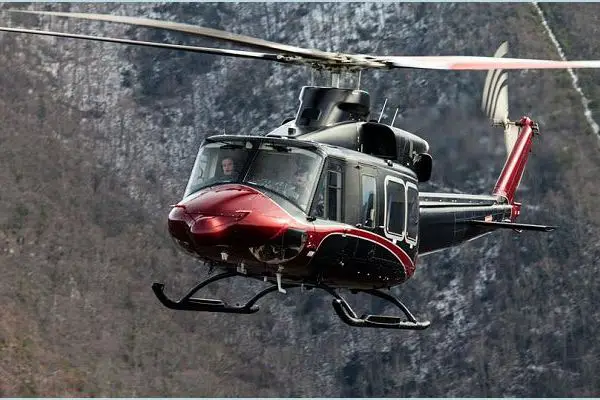
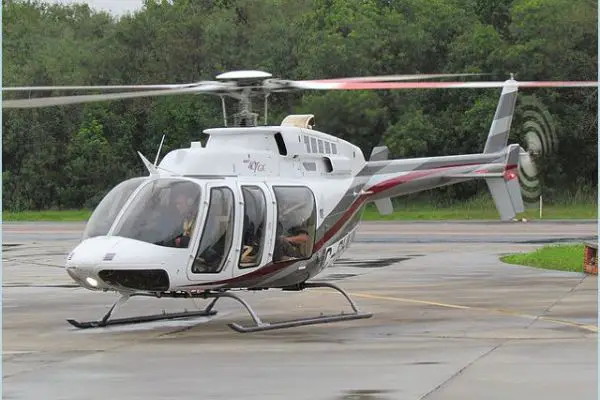
The Bell UH-1Y Venom, officially designated as the Utility Helicopter-1 Yankee, is a combat-proven, twin-engine utility rotorcraft developed by Bell Textron Inc. for the United States Marine Corps (USMC). As the most modern derivative of the legendary UH-1 Huey family, the UH-1Y integrates advanced avionics, composite rotor technologies, and a modular mission architecture. Built to operate in expeditionary, shipboard, and high-threat environments, it is one of the few battlefield helicopters optimized for both lift and armed support within the same airframe.
Country users: Czech Republic, United States




Technical Data
-
Design
The UH-1Y Venom is built on a reinforced semi-monocoque airframe, constructed primarily of corrosion-resistant aluminum-lithium alloys with critical sections composed of ballistic-tolerant composite panels. Unlike its predecessor, the UH-1N, the Yankee model employs a four-blade bearingless, hingeless main rotor system constructed of composite laminates and titanium spars, designed to absorb high-impact loads from small-arms fire and increase aerodynamic efficiency.
The cockpit features crashworthy crew seats, dual-redundant digital flight controls, and MIL-STD-1553B data bus wiring for mission system integration. The cabin is markedly more spacious than earlier Huey models, capable of accommodating up to 10 fully equipped infantrymen or 6 NATO-standard litters with in-flight medical access. Quick-change fittings allow for rapid reconfiguration between troop transport, CASEVAC, and cargo loadout roles within 30 minutes.
The main transmission, rated for continuous 3,380 shp output, is mated to the twin GE T700-GE-401C turboshaft engines via a split-torque drive system, increasing survivability in case of partial drivetrain failure. The four-bladed canted tail rotor, derived from Bell’s Model 412 platform, provides anti-torque authority even in crosswind hover conditions and enhances yaw control at low airspeeds — critical for confined area landings.
The landing gear is a non-retractable tricycle configuration with oleo-pneumatic shock absorption, rated for vertical descent loads of up to 8.5 fps, allowing combat insertions into unprepared terrain. Structural hardpoints include a 6,660 lb-rated belly cargo hook, provisions for fast-rope and rappelling systems, and side-mounted M-279 weapons support pylons.
-
Avionics and Onboard Equipment
The UH-1Y Venom's cockpit is entirely glass and digitized, centered around the Northrop Grumman Integrated Avionics System (IAS). Four color multi-function displays (MFDs) provide pilots with real-time flight data, terrain overlays, weapons status, and networked target information. Navigation is driven by an embedded GPS/INS hybrid system featuring Honeywell H-764G EGI units with Selective Availability Anti-Spoofing Module (SAASM) compatibility for encrypted positioning data.
A key component is the Thales TopOwl helmet-mounted display (HMD), which overlays synthetic vision and targeting reticles onto the pilot’s line of sight. This system is fully integrated with the AN/AAQ-22C FLIR turret, enabling slaved electro-optical cueing for passive surveillance or laser designation.
Communications include a triple-redundant suite of AN/ARC-210 Gen6 radios, capable of UHF/VHF/FM/HF voice and data transmission with embedded COMSEC. Tactical networking is enabled via Link 16, VMF (Variable Message Format) messaging, and Joint Variable Message Format (JVMF), allowing real-time sensor-to-shooter coordination with naval, ground, and air platforms.
Defensive avionics comprise the AN/AAR-47B(V)2 missile approach warning system, AN/ALQ-144A(V)3 IR jammer, and AN/ALE-47 countermeasure dispensers loaded with chaff, flares, and programmable decoys.
-
Engine
The UH-1Y Venom is driven by two General Electric T700-GE-401C turboshaft engines, each rated at 1,828 shaft horsepower under International Standard Atmosphere (ISA) conditions. These engines are equipped with Full Authority Digital Engine Control (FADEC) for precise throttle management, reducing pilot workload and increasing fuel efficiency during variable-altitude profiles.
The helicopter maintains optimal performance up to 6,000 feet density altitude with a full payload, and can operate from sea level up to 14,000 ft MSL with reduced load. The aircraft exhibits a hover out of ground effect (HOGE) capability at 6,000 ft and 95°F — a key metric for operations in high-altitude battlefields such as Afghanistan.
Cruise speed is maintained at approximately 140 knots, with a dash speed of over 170 knots, and a combat radius of 135+ nautical miles — expandable via internal auxiliary tanks or an optional aerial refueling probe, though the latter is limited to special operations configurations.
-
Armament
Although primarily fielded as a utility platform, the UH-1Y Venom is uniquely armed among its global counterparts, capable of delivering both suppressive and precision-guided fires during multi-domain operations. Its modular armament system allows it to transition fluidly between troop lift and armed escort roles without major structural reconfiguration.
Each side door can mount either a GAU-17/A 7.62mm electrically driven rotary gun (up to 3,000 rpm) or a GAU-21 .50-caliber heavy machine gun (1,100 rpm), operated by dedicated aerial gunners. These weapons are fitted to flexible pintle mounts with blast deflectors, and integrated with gyro-stabilized gun sights for accurate suppression during dynamic insertions or extraction under fire.
Two outboard pylon stations, located just aft of the crew cabin, support a range of armament options. Most commonly, these include LAU-68 or LAU-61 70mm rocket pods equipped with either unguided Hydra rockets or the APKWS II (Advanced Precision Kill Weapon System) — a laser-guided variant that provides cost-effective precision strike capability with sub-meter accuracy against soft targets, light vehicles, or dismounted threats.
Though not often fielded in its standard configuration, the UH-1Y can be configured to carry AGM-114 Hellfire missiles, particularly for convoy overwatch or anti-armor roles during high-threat missions. This capability is limited due to weight constraints, but provides critical flexibility when paired with intelligence from ground ISR assets.
Weapon employment is managed through the aircraft’s Weapons Management System (WMS), which integrates pilot HMD cueing, MFD targeting overlays, and FLIR-based laser designation. All ordnance stations are jettisonable in an emergency, and armament loadout is mission-specific, allowing the same airframe to serve in kinetic and non-kinetic roles with minimal turnaround time.


Photo Gallery