- Army
- Air Defense Systems
- Anti-tank systems and vehicles
- Armored Vehicles
- Armoured personnel carriers
- Artillery Vehicles and Weapons
- Command Post
- Communication Vehicles and Systems
- Electronic Warfare
- Engineer | Maintenance Vehicles
- Infantry Fighting Vehicles
- Main Battle Tanks
- Missiles
- Tactical and Logistic Vehicles
- Radars
- Unmanned Systems
- Weapons
- Navy
- Air








Shahed-136
Shahed-136
Loitering munition / Kamikaze-Suicide drone - Iran
Description
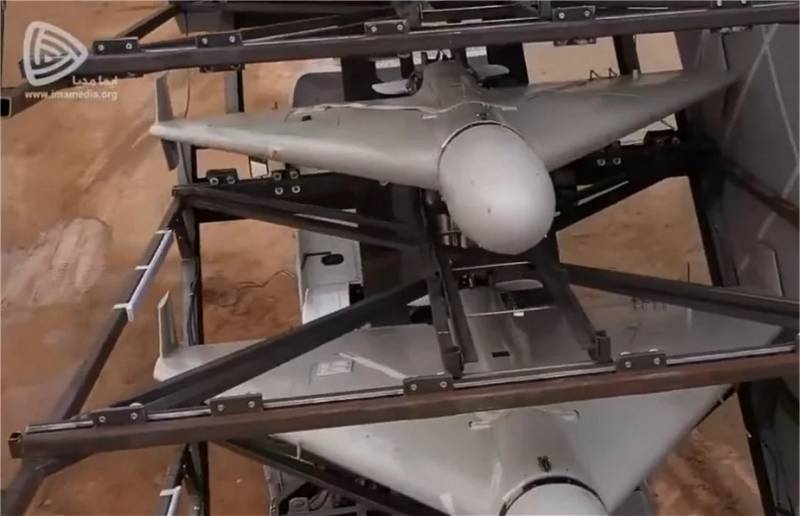
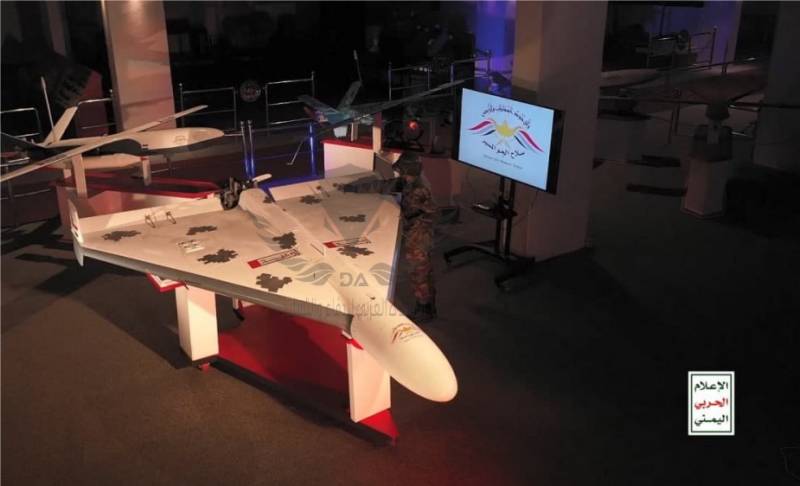
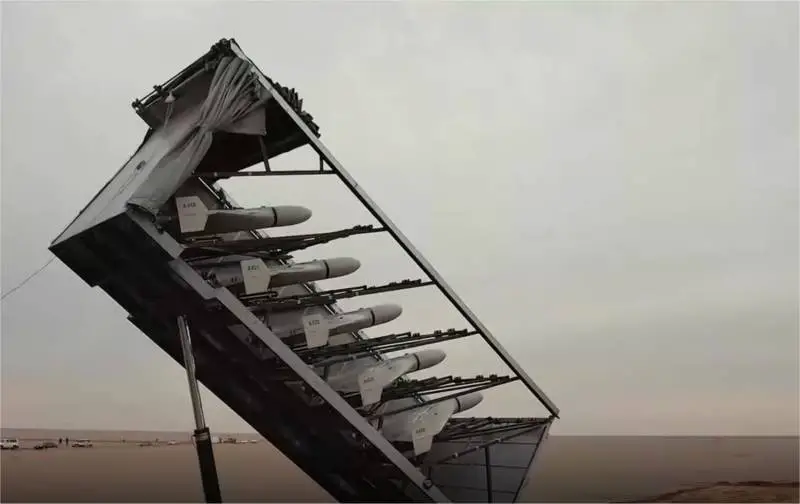
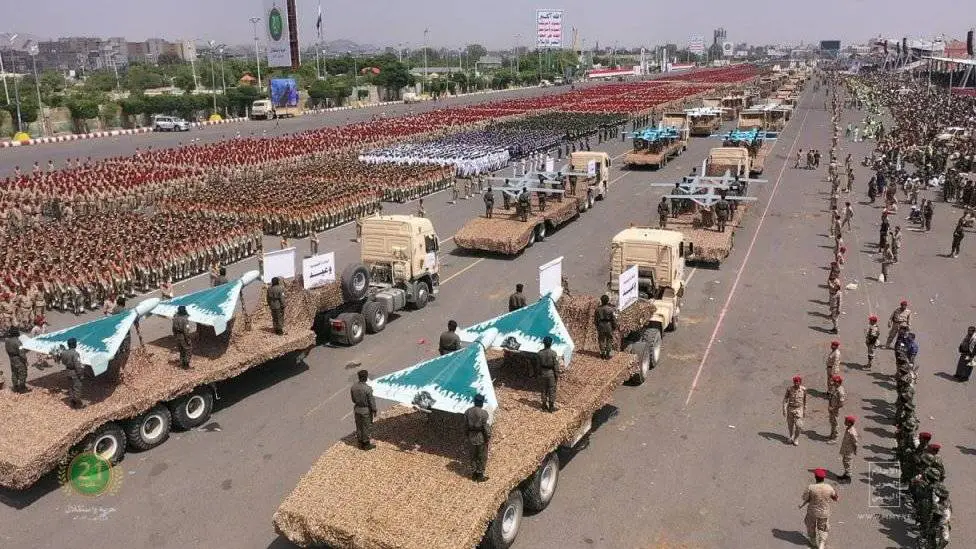
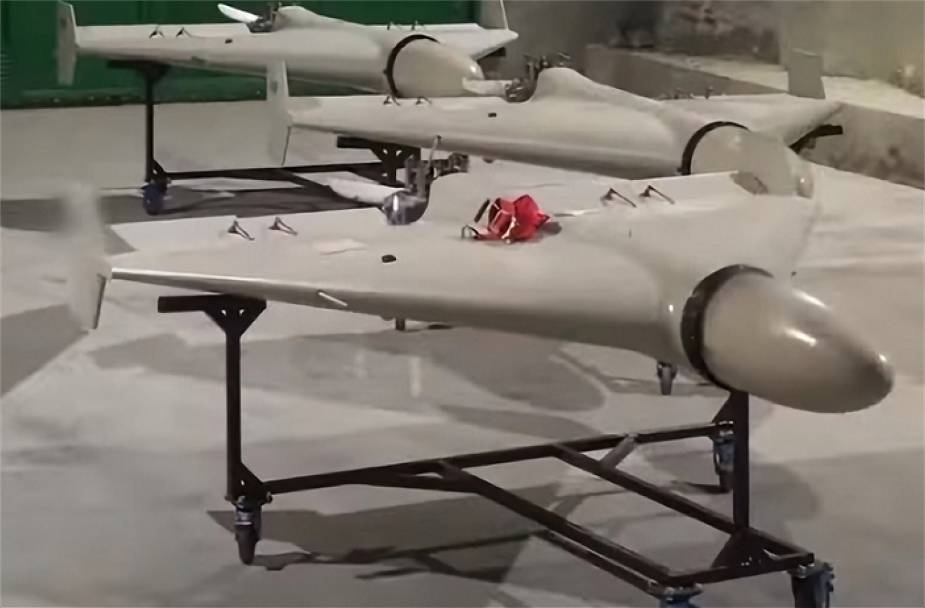
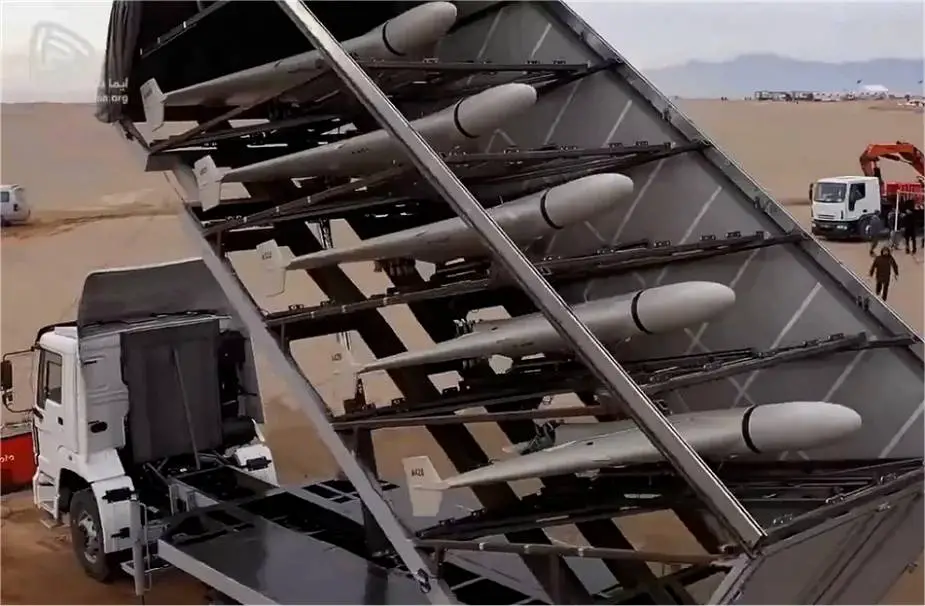
The Shahed-136 is an Iranian-made loitering ammunition, also called a suicide or kamikaze drone, developed and manufactured by Iran Aircraft Manufacturing Industrial Company (HESA). The company was established in 1976 and is owned by the Iran Aviation Industries Organization (IAIO), located in Shahin Shahr, Isfahan. The original factory, built by Textron, was to produce Bell 214s in different configurations in Iran under a deal involving several hundred helicopters and technology transfers. The drone is designed to conduct ground attacks. The Shahed-136 is not only a suicide drone, but according to pictures released by Iranian media, Iran has also created a new way to launch the drones in a kind of multiple-launch, or drone-swarming, format. Drone swarms are a new technology that uses multiple drones to strike targets. The drone was unveiled in 2021 and is now used by the Russian army in Ukraine. According to Newsweek, an American weekly online news magazine, as early as 2020, they were being used by Houthi groups in Yemen. According to information released by the Ukrainian government on October 23, 2022, Russia has ordered 2,400 Iranian-made Shahed-136 suicide drones from Iran.
Shahed-136 variants:
The Shahed-136 is used in three models in the Iranian armed forces: anti-personnel and armored-vehicle, anti-fortification, and radar-seeker.
Technical Data
| Design |
|
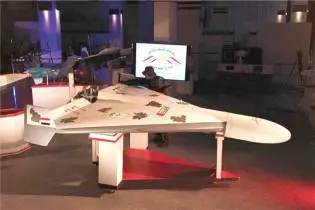
The Shahed-136 is based on a delta-wing shape design with stabilizing rudders at the tips. The engine is located at the rear of the fuselage. The design also incorporates a rear-facing pusher-prop arrangement. It has a length of 3.5 m, a wingspan of 2.5 m, and a weight of around 200 kg.
|
| Payload |
|
The nose section of the Shahed-136 contains a high-explosive fragmentation warhead estimated to weigh 30–50 kilograms of unknown composition, as well as optics for precision attacks. It has a simple inertial navigation system with a consumer-grade GPS system to strike its target. The payload can also include photo equipment capable of capturing still and real-time images or videos.
|
| Flight Capabilities |
| The Shahed-136 is powered by a MADO MD-550 piston engine, a 50-hp Iranian copy of the German Limbach L550E. The engine is located at the rear of the fuselage and drives a two-bladed propeller in a "pusher" arrangement. The drone can fly at a maximum speed of 185 km and has an estimated range from 1,000 to 2,500 km. It can fly at an altitude from 60 to 4,000 m. |
| Combat Use |
| The Shahed 136 is available in three models in the Iranian armed forces: anti-personnel, armored-vehicle, and anti-fortification versions, as well as a radar-seeker version. It can be launched in salvo mode from a truck and used as a swarm drone. With this method, several drones are launched at the same time and fly in formation, controlled from a single station that can be programmed using an algorithm to carry out various tasks, including surveillance or attacks. It can also be used as a pre-programmed direct-attack munitions mode, like a long-range cruise missile, or as a long-duration loitering munition limited by a radio signal range of about 150 km in receiving new GNSS (Global Navigation Satellite System) target location instructions. |
 |
Specifications
| Type | Wingspan |
| A loitering munition, also called a kamikaze or suicide drone | 2.5 m |
| Country users | Weight |
| Iran | 200 kg |
| Designer Country | Speed |
| Iran, Russia | 185 km/h |
| Optics | Range |
| Photo and video equipment | 1,000 to 2,500 km |
| Warhead | Guidance system |
| 30 to 50 kg high-explosive fragmentation | Inertial navigation system with GPS |
Details View
 |
 |
Pictures - Video