Defense Web TV
-
EFES 2026 Reveals Türkiye’s Future Warfare Vision Combining Amphibious Assault and Joint Unmanned Operations
 {loadposition bannertop}{loadposition sidebarpub}
Türkiye used EFES-2026 to demonstrate how its armed forces can combine amphibious assault, attack aviation, drones, electronic warfare, and allied coordination into a single high-intensity combat operation, reinforcing its role as one of NATO’s most capable regional military powers. During the exercise, held from April 11 to May 22, 2026, and observed by Army Recognition Group during the Distinguished Observer Day in Seferihisar, Turkish forces showcased a modern joint-force model designed to project combat power rapidly across contested coastal and maritime environments.
The exercise highlighted Türkiye’s growing ability to connect naval mobility, armored maneuver, rotary-wing strike assets, unmanned systems, layered air defense, and electronic warfare into a unified battlefield network capable of accelerating decision-making and increasing combat survivability. From T-129 ATAK helicopter fire support and swarm-drone strikes, EFES-2026 illustrated how Ankara is shifting from isolated platform modernization toward an integrated multi-domain warfare architecture aligned with NATO operational standards and future littoral combat requirements.
Related Topic: Türkiye Advances NATO Amphibious Warfare Capabilities with M60TM Tanks and Indigenous Landing Craft at EFES 2026
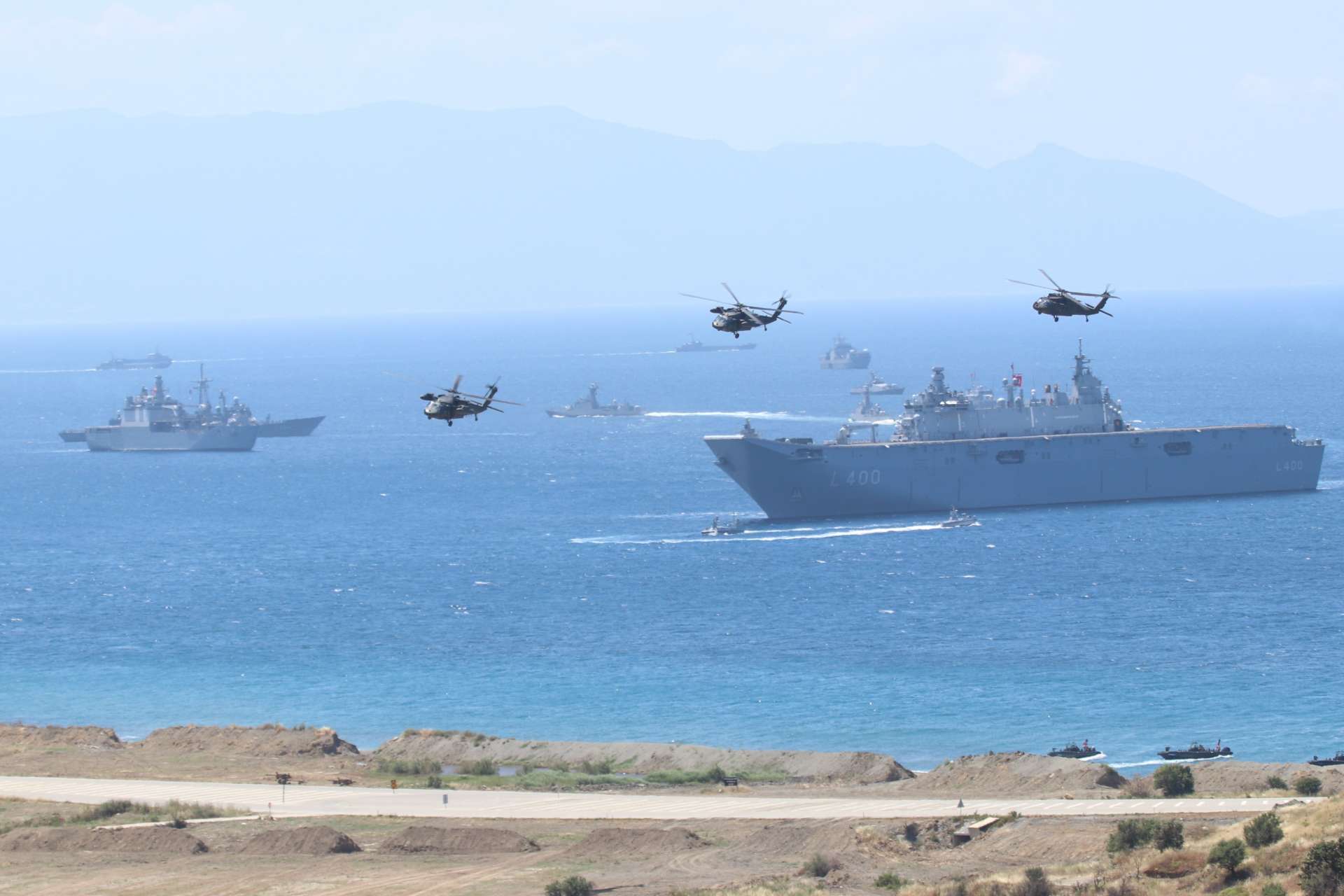
Türkiye used EFES-2026 to showcase a fully integrated multi-domain combat operation combining amphibious assault attack helicopters drones electronic warfare and NATO-coordinated joint-force capabilities across the Aegean theater (Picture Source: Army Recognition Group)
During EFES-2026, Türkiye transformed the İzmir region into a large-scale joint battlespace designed to test command-and-control, force projection, amphibious maneuver, attack aviation, unmanned systems, electronic warfare, air defense, cyber awareness, and multinational combat coordination under live-fire conditions. Conducted in the Gulf of İzmir and the Doğanbey Live-Fire Exercise Area, the exercise ran from April 11 to May 22, 2026, with the Distinguished Observer Day organized on May 20–21 in Seferihisar. During this phase, Army Recognition Group had the honor of attending one of the event’s major aviation sequences, as the Turkish T-129 ATAK attack and tactical reconnaissance helicopter was employed as a fully integrated rotary-wing combat asset within a complex live-fire scenario. EFES-2026 brought together 10,388 personnel, including 1,305 guest personnel from 50 countries, placing Türkiye at the center of one of the region’s largest multinational military training events and reinforcing its role as a capable NATO ally with a strong national defense-industrial base. Rather than presenting EFES-2026 only as a large-scale drill, the exercise showed how Türkiye can connect naval mobility, armored maneuver, attack aviation, unmanned systems, electronic warfare, and allied coordination into a single operational chain designed for high-intensity littoral combat.
EFES is one of the Turkish Armed Forces’ most complete operational-level exercises, built to validate joint-force synchronization across land, naval, air, gendarmerie, coast guard, special operations, cyber, and public-support components. The 2026 edition was structured around a computer-aided command post phase from April 11 to 17, followed by a live-fire field phase from April 20 to May 21 across Western Anatolia, the Central Aegean, İstanbul, the Gulf of İzmir, and the Doğanbey training area. This two-phase architecture allowed Turkish commanders and foreign participants to move from operational planning and digital command simulation to kinetic execution, creating a full training cycle from headquarters-level decision-making to tactical action in a contested battlespace. EFES therefore functions as a full-spectrum validation exercise for the Turkish Armed Forces, testing how command posts, maneuver units, naval assets, airpower, special forces, drones, and support services operate together under compressed timelines and simulated combat pressure.
The multinational dimension gave EFES-2026 a strong NATO and partnership character. Allied and partner nations joined Türkiye in a complex live-fire environment, allowing Turkish commanders to demonstrate the country’s ability to host, coordinate, and lead large-scale multinational activity. This format strengthened practical allied skills such as operational planning, airspace deconfliction, tactical communications, live-fire coordination, joint fires management, and rapid decision-making under pressure. For Türkiye, the exercise projected military confidence and command depth; for NATO, it showcased the value of a frontline ally positioned at the junction of the Black Sea, the Aegean, the Eastern Mediterranean, the Balkans, the Caucasus, and the Middle East. Türkiye’s geography gives EFES a wider strategic dimension, as the country can train forces in scenarios reflecting several crisis environments, from coastal defense and maritime security to expeditionary operations and rapid reinforcement missions.
The core of EFES-2026 was the integration of sea, land, and air power into a single combat sequence. Large-scale amphibious and air assault operations were executed with naval fire support, close air support, unmanned systems, electronic attack, ground maneuver, and fire-support coordination. In the amphibious phase, Turkish naval assets supported the movement of forces from sea to shore, while landing craft delivered armored vehicles and troops toward the beach. The use of Turkish Navy 151 Class Landing Craft Tank vessels and M60TM main battle tanks illustrated how Türkiye can transfer armored combat power from the maritime domain onto an unimproved coastline, then push inland under a protective umbrella of aviation, infantry, naval fires, and battlefield surveillance. The critical point in such an operation is the transition from beach access to inland maneuver. By bringing armor ashore early, Turkish forces reduced the vulnerability of the landing force, created immediate direct-fire support, and accelerated the shift from a coastal lodgment to an offensive ground action.
The air component added a high-tempo strike and reconnaissance layer to the exercise. Turkish aviation assets supported close air support, armed overwatch, air assault, tactical reconnaissance, escort, and precision-engagement missions, while the T-129 ATAK demonstrated its value as a day-and-night attack helicopter able to protect landing forces, support commando operations, and disrupt hostile movement. With a mission package that can include 20 mm cannon fire, CİRİT laser-guided missiles, anti-tank missiles, rockets, and air-to-air missiles, the ATAK provides Turkish commanders with a flexible rotary-wing combat system suited to littoral defense, border security, rapid reaction, and crisis-response missions across NATO’s southern and southeastern approaches. In this role, the T-129 ATAK is not simply an attack helicopter; it is a maneuver enabler, protecting vulnerable forces during landing, insertion, regrouping, and breakout phases while giving commanders a responsive precision-fire asset inside a compressed tactical window.
Unmanned systems and electronic warfare formed another central pillar of EFES-2026. During the night phase, a hostile mobile communications center equipped with electronic warfare systems was targeted through coordinated swarm-drone employment after detection by a Bayraktar AKINCI armed UAV equipped with the ASELSAN ANTIDOT Electronic Warfare Pod and other support systems. STM also presented a live-ammunition swarm operation in which 20 KARGU loitering munition units took off under the control of a single operator, navigated autonomously to the mission area, exchanged target data in real time, and carried out a synchronized attack. This sequence demonstrated Türkiye’s growing capacity to combine autonomous platforms, electronic attack, ISR collection, target designation, and kinetic effects into a compressed sensor-to-shooter cycle. It also reflected lessons visible in recent conflicts, where drones, electronic warfare, dispersed command posts, precision artillery, short-range air defense, and rapid target acquisition have reshaped battlefield tempo.
EFES-2026 also served as a field demonstration for Türkiye’s expanding defense industry. Turkish-made systems used during the exercise included GÖKBEY helicopters, M60T1 tanks, Panter and Boran howitzers, TRLG-230 laser-guided missiles, SUNGUR man-portable air-defense systems, HİSAR-A and HİSAR-O air-defense systems, KORKUT self-propelled anti-aircraft guns, KALKAN radar, İHTAR counter-UAV systems, KARAOK, OMTAS and UMTAS anti-tank missiles, MİLKAR-A electronic attack systems, ALKA and GÖKBERK laser weapons, TOLGA short-range air-defense systems, kamikaze drones, mine-clearing systems, electro-optical sensors, robotic EOD vehicles, satellite terminals, and fire-support systems. This broad inventory showed that Türkiye is fielding a national combat ecosystem able to support joint operations while preserving compatibility with allied operational standards. The value of this inventory is not only in the number of systems displayed, but in the fact that many of them are now being tested as part of a connected combat architecture rather than as isolated products, moving Turkish industry from platform development toward mission integration across air defense, artillery, drones, electronic warfare, armored forces, and naval operations.
The presence of TCG Anadolu and carrier-capable unmanned systems added a maritime-strategic layer to the exercise. Bayraktar TB3 unmanned combat aircraft operated from TCG Anadolu, while Bayraktar Akıncı provided intelligence, surveillance, and reconnaissance support during joint operations. This combination of amphibious shipping, drone aviation, attack helicopters, landing craft, naval fire support, and command-and-control assets reflects Türkiye’s growing ability to project force from the sea, control the littoral battlespace, and support allied deterrence from a mobile naval base. In this configuration, TCG Anadolu should be understood not only as an amphibious assault ship, but as a mobile command, aviation, and force-projection platform able to support landing operations, drone missions, helicopter activity, and maritime control from a single naval base at sea. For NATO, this Turkish model strengthens the Alliance’s southern and southeastern posture by adding national naval aviation, unmanned strike capacity, amphibious lift, integrated air defense, and electronic warfare capabilities to a region where maritime security and rapid reinforcement remain central to stability.
EFES-2026 was more than a major live-fire exercise; it was a disciplined demonstration of how Türkiye is shaping a modern joint-force model built around national technology, allied cooperation, and high-readiness combat power. From command-post planning to amphibious landing operations, from T-129 ATAK helicopter fire support to swarm-drone strikes, from TCG Anadolu’s maritime role to layered air defense and electronic warfare, the exercise showed a Turkish Armed Forces able to operate across land, sea, air, cyber, electronic, and unmanned domains with growing confidence. For Ankara, EFES-2026 confirmed the progress of a sovereign defense-industrial base; for NATO, it highlighted the value of a Turkish ally able to generate credible combat power, host multinational operations, and reinforce collective security across one of the Alliance’s most exposed strategic regions. EFES-2026 ultimately showed that Türkiye is not only modernizing its armed forces, but also building an integrated combat model that combines national technology, NATO-compatible procedures, and the ability to operate decisively across the sea-land-air interface.
Written by Teoman S. Nicanci – Defense Analyst, Army Recognition Group
Teoman S. Nicanci holds degrees in Political Science, Comparative and International Politics, and International Relations and Diplomacy from leading Belgian universities, with research focused on Russian strategic behavior, defense technology, and modern warfare. He is a defense analyst at Army Recognition, specializing in the global defense industry, military armament, and emerging defense technologies.
-
Top 10 Turkish Defense Products 2026 at SAHA Expo Revealing NATO’s Next War Technologies
{loadposition bannertop}{loadposition sidebarpub}
Türkiye used SAHA Expo 2026 in Istanbul to unveil a new generation of indigenous armored vehicles, ballistic missiles, unmanned combat aircraft, naval drones, and autonomous warfare systems, underscoring Ankara’s accelerating drive for strategic military independence and greater influence in NATO-era defense markets. Army Recognition selected the ten most strategically significant Turkish defense products showcased at the exhibition based on battlefield relevance, combat capability, technological innovation, and future operational impact.
The selected systems reveal how Türkiye is rapidly expanding its ability to deliver long-range strike power, autonomous combat operations, advanced survivability, and multi-domain battlefield integration across land, air, and naval warfare. Beyond industrial growth, the Army Recognition Top 10 Turkish defense products highlight a broader shift toward combat-ready, export-focused Turkish defense technologies designed to compete in future high-intensity conflicts and evolving NATO operational environments.
Related Topic: Over 1,700 defense companies head to Türkiye's SAHA 2026 to unveil hundreds of new drones and weaponsTürkiye showcases next-generation defense technologies during SAHA Expo 2026 in Istanbul. (Picture source: Army Recognition Group)
The Attila 155mm truck-mounted self-propelled howitzer, developed by MKE, reflects Türkiye’s growing emphasis on highly mobile, long-range artillery capable of supporting rapid maneuver warfare. Mounted on a tactical military truck chassis, the self-propelled howitzer combines strategic mobility with heavy firepower while enabling rapid shoot-and-scoot operations to avoid enemy counter-battery fire. The artillery vehicle integrates digital fire-control technology and automated loading support to improve reaction speed and precision during indirect fire missions. The combat experience observed in Ukraine has reinforced the importance of mobile artillery capable of relocating immediately after firing, making systems such as the Attila increasingly relevant for modern high-intensity warfare. Read also our coverage of Turkish artillery modernization.
The Yildirimhan intercontinental ballistic missile concept presented at SAHA Expo highlighted Türkiye’s long-term ambitions in strategic missile development and indigenous deterrence capabilities. Although technical details remain limited, the missile attracted significant attention due to its potential to extend Türkiye’s strategic strike reach far beyond regional operational theaters. The development of an intercontinental ballistic missile would require advanced expertise in propulsion technology, guidance systems, thermal protection, and reentry vehicle engineering, placing Türkiye among a very limited group of nations possessing such capabilities. The presentation of the missile also illustrates Ankara’s determination to strengthen sovereign strategic defense technologies amid growing regional missile competition.
Discover Army Recognition’s exclusive coverage from SAHA Expo 2026 featuring the Top 10 Turkish defense products shaping the future of modern warfare. (Vide source: Army Recognition Group)
ASELSAN’s Tufan naval kamikaze drone demonstrated Türkiye’s growing investment in autonomous maritime warfare and asymmetric naval strike operations. Designed as a high-speed unmanned surface vessel carrying an explosive payload, the naval drone is optimized to conduct swarm attacks against warships, coastal infrastructure, and amphibious assault forces while minimizing risks to naval personnel. The vessel integrates autonomous navigation technologies, electro-optical targeting systems, and secure communication links to support coordinated maritime attack missions. The increasing deployment of unmanned naval strike assets worldwide highlights the growing operational value of low-cost autonomous attack vessels capable of saturating traditional naval defenses. More on Turkish naval drone developments.
The Anka-III unmanned combat aerial vehicle developed by Turkish Aerospace Industries was among the most advanced combat aircraft displayed at the exhibition. Featuring a stealth-oriented flying-wing configuration, internal weapon carriage, and autonomous mission-management capabilities, the unmanned combat aerial vehicle is designed to conduct deep-strike missions, suppress enemy air defenses, conduct reconnaissance, and conduct electronic warfare operations in heavily defended airspace. The aircraft marks a significant evolution in Türkiye’s combat aviation sector as the country transitions from conventional reconnaissance drones toward low-observable combat aircraft capable of operating against sophisticated integrated air-defense networks.
BMC’s Pamir 4x4 light tactical armored vehicle highlighted Türkiye’s modernization efforts in protected mobility for reconnaissance, rapid-response, and special operations missions. The armored vehicle combines lightweight ballistic protection, high tactical mobility, and modular mission adaptability, making it suitable for asymmetric warfare environments and difficult-terrain operations. Designed for troop transport, command-and-control missions, and internal security tasks, the Pamir also provides improved survivability against mines and improvised explosive devices. The vehicle addresses the growing operational demand for highly mobile armored vehicles to support dispersed, fast-moving combat formations across modern battlefields.
The IKA-Palem unmanned ground vehicle developed by Tekatron demonstrated Türkiye’s increasing focus on robotic land warfare and autonomous battlefield support capabilities. Designed for reconnaissance, logistics transport, perimeter security, and potentially armed combat missions, the robotic combat vehicle reduces soldiers' direct exposure in dangerous operational zones. The unmanned ground vehicle integrates autonomous navigation technologies, advanced sensors, and remote-control systems to support operations in urban environments and contested terrain. The growing role of robotic combat vehicles in modern warfare reflects the broader military trend toward human-machine teaming and autonomous force multiplication during high-risk missions.
DELTAV’s HISTEPP hypersonic test platform emerged as one of the most technologically ambitious aerospace projects presented during SAHA Expo 2026. Developed to support research into hypersonic propulsion and ultra-high-speed flight technologies, the test platform is intended to validate aerodynamic performance, propulsion systems, and guidance solutions operating at speeds exceeding Mach 5. Hypersonic weapons are increasingly considered critical strategic assets due to their ability to evade conventional missile-defense networks and drastically reduce enemy response times. Türkiye’s investment in hypersonic flight research demonstrates its determination to enter a strategic technological field currently dominated by only a few global military powers.
Bayraktar’s Kizilelma unmanned fighter aircraft remained one of the exhibition’s most strategically important combat aircraft due to its role in Türkiye’s future airpower doctrine. Unlike conventional unmanned aerial vehicles designed primarily for surveillance or limited strike operations, the Kizilelma is intended to perform air-to-air combat, deep-strike missions, and carrier-capable operations from vessels such as the TCG Anadolu amphibious assault ship. The unmanned fighter aircraft integrates advanced avionics, artificial intelligence-assisted combat management, and low-observable design characteristics to operate in highly contested operational environments. The aircraft reflects Türkiye’s objective of pioneering a new generation of unmanned combat aircraft capable of supplementing or replacing conventional crewed fighter aircraft. See our analysis of Türkiye’s next-generation combat aviation programs.
The Altay main battle tank displayed by BMC represents Türkiye’s long-term effort to establish a fully indigenous heavy armored warfare capability for the Turkish Armed Forces. Developed to replace aging armored fleets and reduce dependence on foreign suppliers, the main battle tank integrates advanced composite armor protection, digital fire-control systems, modern battlefield management technologies, and high-mobility performance optimized for modern mechanized warfare. The armored vehicle is designed to survive against anti-tank guided missiles, loitering munitions, and conventional armored threats while providing high-precision direct fire support during offensive operations. The Altay program remains strategically important for Türkiye’s military-industrial independence and the future modernization of its armored forces.
The ALKA Kaplan hybrid autonomous combat vehicle, jointly developed by FNSS and Roketsan, showcased one of the most innovative combinations of armored mobility and directed-energy defense technology presented during the exhibition. The tracked combat vehicle integrates the ALKA directed-energy weapon with autonomous targeting capabilities to counter unmanned aerial vehicles, loitering munitions, and asymmetric drone swarm attacks. Designed to protect maneuver forces against rapidly emerging low-altitude aerial threats, the combat vehicle combines electronic warfare functions, hard-kill defensive capability, and autonomous engagement technologies within a highly mobile armored configuration. The increasing proliferation of battlefield drones has accelerated demand for mobile counter-drone combat vehicles capable of accompanying frontline armored formations during high-intensity operations.
The defense products presented during SAHA Expo 2026 demonstrated that Türkiye’s defense industry is rapidly evolving beyond conventional modernization programs toward advanced indigenous capabilities in hypersonic weapons, robotic warfare, unmanned combat aviation, autonomous naval strike assets, directed-energy defense, and next-generation armored combat vehicles. The exhibition confirmed Ankara’s ambition to position itself among the world’s leading defense exporters while strengthening operational independence across every major military domain.
Written by Alain Servaes – Chief Editor, Army Recognition Group
Alain Servaes is a former infantry non-commissioned officer and the founder of Army Recognition. With over 20 years in defense journalism, he provides expert analysis on military equipment, NATO operations, and the global defense industry.
-
MKE Reveals Türkiye’s Emerging Ecosystem for Layered Air Defense and Rapid Mobile Artillery in Modern High-Intensity Warfare
{loadposition bannertop}{loadposition sidebarpub}
Turkish defense manufacturer Makine ve Kimya Endüstrisi used SAHA Expo 2026 in Istanbul to unveil a broad portfolio of artillery, air defense, naval, and combat-support systems that reflects Türkiye’s shift toward integrated battlefield capabilities and greater military-industrial autonomy. As detailed during an exclusive briefing to Army Recognition Group by MKE Deputy General Manager Tolga M. Celik, the company’s latest systems are designed around the operational realities of modern high-intensity warfare, where survivability, mobility, counter-drone protection, and sustained firepower increasingly determine combat effectiveness.
The centerpiece of the showcase was the layered TOLGA VSHORAD architecture and its newly integrated ENFAL-17 missile, laser weapon, and acoustic detection technologies, which together demonstrate Türkiye’s growing focus on affordable multi-layer air defense against drones, loitering munitions, and low-altitude threats. MKE also highlighted the URAN 105 mm mobile artillery system and the ATTİLA 155 mm truck-mounted howitzer, reinforcing Türkiye’s push toward highly mobile “shoot-and-scoot” fire support systems optimized for dispersed operations, rapid deployment, and survivability under modern counter-battery and drone-intensive combat conditions.
Related Topic: Türkiye’s MKE URAN 105 mm System Delivers a Mobile Firepower Solution for NATO Distributed Operations
MKE used SAHA Expo 2026 to unveil a broad portfolio of layered air defense, rapid mobile artillery, naval munitions, and battlefield support systems designed around the operational demands of modern high-intensity warfare (Picture Source: Edited By Army Recognition Group)
At SAHA Expo 2026 in Istanbul, Turkish defense company Makine ve Kimya Endüstrisi A.Ş. delivered one of the exhibition’s most complete and strategically significant showcases, presenting a new generation of artillery, very short-range air defense, naval ammunition, mine-clearing systems, and small arms. The display highlighted MKE’s transformation from a historic ammunition and weapons manufacturer into one of Türkiye’s central defense-industrial pillars, with a portfolio shaped by the operational lessons of modern warfare and by Ankara’s drive for greater defense sovereignty.
Among the systems presented were the ATTİLA 155 mm truck-mounted howitzer, the URAN 105 mm mobile artillery system, the expanded TOLGA short-range air defense architecture, the ENFAL-17 low-altitude missile, newly integrated laser and acoustic detection technologies, the ALPAY-2 minefield breaching system, the MALAMAN smart naval mine, new 130 mm naval chaff ammunition, and the MKE-300 Blackout rifle. Army Recognition Group also conducted an exclusive interview at the exhibition with Mr. Tolga M. Celik, Deputy General Manager of MKE, who guided our team through the newly unveiled products and provided detailed briefings on the TOLGA VSHORAD air defense system, the ENFAL-17 missile, the URAN mobile howitzer system, and MKE’s ammunition solutions.
MKE’s display at SAHA Expo 2026 was not simply a product presentation. It was a strategic message about Türkiye’s growing ability to design, manufacture, integrate, and export defense systems adapted to the operational realities of modern warfare. In recent conflicts, artillery mobility, counter-drone protection, ammunition supply, minefield breaching, naval survivability, and rapid fire support have become decisive factors. MKE’s portfolio directly addressed these requirements and showed how Turkish industry is moving from single-product manufacturing toward integrated battlefield solutions. The tone of the company’s participation was therefore clear: Türkiye no longer seeks only to reduce dependence on foreign suppliers, but to become a provider of complete, NATO-compatible, and exportable combat systems developed through national engineering and industrial sovereignty.
The central focus of MKE’s air defense presentation was the TOLGA VSHORAD system, developed to meet the new aerial threats emerging from current battlefields. As explained to Army Recognition Group by Mr. Tolga M. Celik, TOLGA is not a single weapon station but a layered very short-range air defense architecture combining radar systems, hard-kill effectors, and soft-kill solutions in different calibers and ranges. This approach reflects the growing complexity of the low-altitude threat environment, including small drones, loitering munitions, low-flying aerial platforms, and asymmetric air attack systems. Instead of relying on one effector, MKE has developed TOLGA as an integrated defensive ecosystem able to detect, identify, track, disrupt, and neutralize threats through complementary layers. This makes TOLGA one of the clearest examples of how MKE is transforming operational lessons into a Turkish-built air defense architecture designed for modern warfare.
At SAHA Expo 2026, MKE showcased three newly added technologies integrated into the TOLGA system: a Laser Weapon System, an Acoustic Sensor, and the ENFAL-17 missile system. This evolution moves TOLGA from a gun-based counter-UAV capability toward a multi-layer air defense solution able to address drones, loitering munitions, helicopters, and other low-altitude threats. The Laser Weapon System provides a directed-energy option against selected aerial targets and optical systems, while the Acoustic Sensor improves detection against small or low-signature threats that may be difficult to identify through radar alone. The ENFAL-17 missile adds a kinetic interception layer, extending the system’s engagement options beyond gun-only solutions. Together, these additions show that MKE is developing TOLGA as a flexible and expandable air defense system based on operational realism, cost-effectiveness, and technological sovereignty.
The ENFAL-17 low-altitude air defense missile was one of the notable new products associated with the TOLGA family. Information presented during the exhibition described it as a 70 mm-diameter missile, approximately two meters long, using solid propulsion and designed to engage low-altitude aerial targets. Its integration with TOLGA gives MKE a missile-based hard-kill layer that complements guns, jammers, radar systems, acoustic detection, electro-optical tracking, and directed-energy effectors. In current conflicts, where armed forces must intercept large numbers of relatively low-cost drones without exhausting expensive air defense interceptors, the development of a simpler and more affordable missile solution is highly relevant. For Türkiye, ENFAL-17 reinforces the national counter-UAV ecosystem and contributes to the country’s growing role in the international short-range air defense market.
Alongside its air defense display, MKE unveiled the URAN 105 mm vehicle-mounted weapon system, another important artillery development as reported by Army Recognition Group on May 5, 2026. URAN transfers the firepower and operational experience of the BORAN 105 mm lightweight howitzer onto a mobile 4x4 platform. Integrated on the KİA Light Tactical Vehicle, URAN is designed to give land forces a fast-moving fire-support system able to move, fire, and relocate before enemy drones, radars, or counter-battery systems can fix its position. The system combines a 105 mm gun with an MKE-developed fire control system, offers a rate of fire of up to 12 rounds per minute, and can engage targets at distances of up to 18 km. Army Recognition Group also noted that the KLTV platform gives the system high road mobility, with the vehicle described as offering strong off-road performance and a maximum speed of 130 km/h.
URAN is particularly significant because it transforms the logic of the 105 mm howitzer. Traditionally, such weapons have been valued for their lighter weight, ease of deployment, and suitability for mountain, airborne, or rapid reaction operations. By mounting this firepower on a 4x4 tactical vehicle, MKE has created a system that can support dispersed operations, border defense, island defense, mountain warfare, rapid reinforcement missions, and light mechanized units. Compared with heavier 155 mm artillery, URAN offers a lighter and more flexible option for missions where speed, terrain access, and deployment simplicity are more important than maximum range or shell weight. Its baseline comes from BORAN, a 105 mm lightweight howitzer already in service with the Turkish Armed Forces and exported to Bangladesh in 2024, which Army Recognition Group described as the first howitzer export in the history of the Republic of Türkiye. In this sense, URAN is not an isolated experiment, but the mobile evolution of a proven Turkish artillery capability.
A central element of MKE’s wider artillery showcase was also the ATTİLA 155 mm truck-mounted howitzer, unveiled at SAHA Expo 2026 as a new high-mobility artillery solution. As reported by Army Recognition Group, ATTİLA is mounted on a Tatra 6x6 tactical chassis and integrates a 155 mm 52-caliber gun, placing it in the same operational category as systems such as CAESAR, ATMOS 2000, and Archer. The system is designed for modern shoot-and-scoot operations, where artillery units must deploy quickly, fire, and relocate before counter-battery radars, drones, or precision weapons can target their position. Army Recognition Group reported that ATTİLA can fire four to six rounds per minute, carries 38 rounds onboard, and also carries three smoke or illumination shells. It reportedly requires around 50 seconds to enter firing position and approximately 35 seconds to leave position after completing a fire mission, while its maximum road speed of 85 km/h, operational range of up to 850 km, and combat weight of around 29 tonnes give it a strong operational profile for high-intensity warfare.
MKE also used SAHA Expo 2026 to briefly present other newly unveiled or newly highlighted systems that complement its core air defense and artillery portfolio. In the engineering domain, the ALPAY-2 vehicle-mounted minefield breaching system was presented as a capability designed to create safe corridors through mined terrain, a requirement that has regained major importance as recent conflicts have shown how dense minefields can slow or stop mechanized operations. In the naval domain, MKE displayed the MALAMAN smart bottom mine, designed to detect and classify targets through acoustic, magnetic, and pressure sensors, as well as new 130 mm chaff ammunition for naval self-protection against radar-guided anti-ship missiles. The company also displayed the MKE-300 Blackout rifle, a compact weapon associated with special operations and close-quarter combat requirements. These systems show that MKE is not only focused on large platforms, but also on the supporting technologies, munitions, and tactical systems that allow armed forces to operate with greater autonomy and resilience.
MKE’s ammunition solutions formed another central part of the briefing provided to Army Recognition Group by Mr. Tolga M. Celik. These solutions are a key element of the company’s identity and remain one of its strongest industrial advantages. In modern conflicts, the availability, reliability, and diversity of ammunition are as important as the platforms themselves. Artillery systems, air defense weapons, small arms, naval systems, and counter-drone solutions all depend on a secure and sovereign ammunition supply. By presenting both weapon systems and the ammunition needed to sustain them, MKE showed the depth of Türkiye’s defense-industrial base and its ability to support long-duration operations without relying entirely on external suppliers. This is one of the areas where MKE gives Türkiye a decisive strategic advantage, because national firepower is only credible when it is backed by scalable ammunition production.
MKE’s showcase at SAHA Expo 2026 highlighted a company moving rapidly into a new phase. TOLGA, ENFAL-17, the Laser Weapon System, and the Acoustic Sensor show a serious Turkish approach to counter-drone and short-range air defense. URAN transforms proven 105 mm firepower into a fast 4x4 system for distributed operations, while ATTİLA brings Türkiye into the market for high-mobility 155 mm NATO-standard artillery. ALPAY-2 addresses the renewed challenge of mine warfare, MALAMAN and the new chaff munitions strengthen naval deterrence and ship protection, and the MKE-300 Blackout rifle confirms the company’s continued role in small arms. Together, these systems show MKE as a central pillar of Türkiye’s defense industry: technically ambitious, export-oriented, operationally relevant, and increasingly capable of offering complete solutions for the modern battlefield. With the exclusive briefing provided to Army Recognition Group by Mr. Tolga M. Celik, SAHA Expo 2026 also confirmed that MKE is not only presenting new products, but helping shape Türkiye’s rise as an independent, confident, and increasingly influential defense power.
Written by Teoman S. Nicanci – Defense Analyst, Army Recognition Group
Teoman S. Nicanci holds degrees in Political Science, Comparative and International Politics, and International Relations and Diplomacy from leading Belgian universities, with research focused on Russian strategic behavior, defense technology, and modern warfare. He is a defense analyst at Army Recognition, specializing in the global defense industry, military armament, and emerging defense technologies.
-
Türkiye’s Nurol Makina Presents Combat-Ready 4x4 Armored Vehicles for NATO Battlefield Operations
{loadposition bannertop}{loadposition sidebarpub}
Nurol Makina used SAHA 2026 in Istanbul to showcase three armored vehicle configurations designed for the same battlefield reality: moving troops, weapons and medical teams through environments shaped by mines, drones, ambushes and indirect fire. In a video interview conducted during the exhibition held from May 5 to 9, 2026, the Turkish manufacturer highlighted the NMS-EWB, NMS-L and Ejder Yalçın as mission-tailored solutions that expand tactical mobility while maintaining protection across different combat roles and operational tempos.
The heavier NMS-EWB increases troop and payload capacity for frontline deployments, while the lighter NMS-L prioritizes rapid maneuverability for mobile operations and dispersed forces. Nurol Makina also presented the Ejder Yalçın in ambulance configuration, reinforcing the growing battlefield demand for protected multi-role platforms capable of supporting casualty evacuation, command, reconnaissance, air defense and counter-IED missions in modern high-threat environments.
Related topic: Turkish Nurol Makina Expands Malaysia 4x4 Armored Vehicle Production Hub.
Nurol Makina presents its NMS-EWB, NMS-L 4x4 and Ejder Yalçin ambulance at SAHA 206 in Istanbul, highlighting Türkiye's expanding range of protected 4x4 armored vehicles for troop transport, reconnaissance, fire support, medical evacuation and export markets (Picture source: Army Recognition Group).
The NMS-EWB is the most personnel-oriented vehicle in the display. The extended wheelbase version increases internal volume compared with the shorter NMS and is presented by Nurol Makina as a vehicle able to carry up to 11 personnel, which places it closer to a compact armored personnel carrier than a simple patrol vehicle. This matters for units that must move a full section with equipment while avoiding the weight, cost and logistical footprint of a 6x6 or 8x8 wheeled armored vehicle. The NMS family includes run-flat tires, hydraulic-assisted steering, gun loops on both sides, built-in radio infrastructure, internal communication, front and rear cameras, day/night vision options, a 360-degree driver vision system, smoke grenade launchers, CTIS, self-recovery equipment, CBRN protection, fire suppression and an explosion-proof, puncture-resistant fuel tank. Its mobility data are also concrete: up to 90 cm fording, 70 percent gradient, 40 percent side slope, 0.9 m trench crossing and 0.5 m vertical obstacle crossing.
The armament options explain why the NMS-EWB should not be viewed only as a troop carrier. Nurol Makina lists integration of manual weapon mounts or remote-controlled weapon stations, including 7.62 mm machine guns, 12.7 mm heavy machine guns, 40 mm grenade launchers, air defense systems and anti-tank weapon systems. A 7.62 mm weapon is suited to routine patrol, checkpoint security and suppression of exposed infantry at shorter ranges. A 12.7 mm heavy machine gun gives the crew a useful response against light vehicles, firing positions and low walls. A 40 mm automatic grenade launcher changes the tactical effect because it can engage troops behind cover, in defilade or inside compounds. Anti-tank guided missile integration would allow a small wheeled vehicle team to cover likely armored approaches, while a short-range air defense fit would give convoy or base-defense units a mobile counter to helicopters, low-flying aircraft and some unmanned aerial threats, depending on the missile and sensor package selected by the customer.
The NMS-L addresses a different requirement: a lighter 4x4 armored vehicle for reconnaissance, escort, special operations support, forward observation, border patrol and quick reaction tasks where speed and lower visual mass are more important than carrying a full infantry section. Nurol Makina gives the NMS-L a crew capacity of up to five, full independent suspension, STANAG 4569-based ballistic, mine and IED protection, run-flat tires, CTIS, five-point seat belts, four side doors and one rear door. Published performance figures include 150 km/h maximum speed on paved roads, 120 km/h on unpaved roads, 700 km range at 70 km/h, 8 m or less turning radius, 0.9 m fording, 70 percent gradient, 40 percent side slope, 0.9 m trench crossing and 0.5 m obstacle crossing. Those figures describe a vehicle designed less for holding ground and more for rapid movement between dispersed positions, especially where small units must move under observation and limit exposure time.
The NMS-L’s weapons integration is particularly relevant because it reflects a shift in the light armored vehicle market. The vehicle has been shown with manual open turret and remote weapon station options, as well as a configuration fitted with a remote-controlled turret armed with a 30 mm weapon system. A 30 mm weapon on a five-person 4x4 creates a different tactical category from a vehicle armed only with a 7.62 mm or 12.7 mm gun: it can defeat many light armored vehicles, damage field fortifications, engage technical vehicles at standoff distance and provide direct fire for reconnaissance or raiding elements. The vehicle has also been associated with Ilgar loitering munition launchers, with a munition weight of 1.5 kg, launcher weight of 2 kg, cruising speed of 120 km/h, more than 20 km effective range, 15 minutes endurance, terminal speed up to 160 km/h and a 400 g multipurpose warhead claimed to defeat 200 mm RHA. This combination gives a light 4x4 crew both line-of-sight firepower and a limited beyond-line-of-sight strike option, although ammunition load, sensor integration and command authorization procedures would determine its real battlefield utility.
The Ejder Yalçın ambulance displayed at SAHA 2026 highlights a less visible but operationally critical part of protected mobility: casualty evacuation under threat. In current conflicts, medical evacuation vehicles must cross the same roads exposed to mines, artillery fragments, ambushes and drones as combat vehicles. An armored ambulance based on Ejder Yalçın allows medical personnel to reach wounded troops with better protection than a soft-skinned ambulance, while keeping the same automotive and protection baseline as other vehicles in the unit. The ambulance variant is configured for emergency medical intervention and can be adapted to carry stretcher and seated patients depending on the internal layout. The broader Ejder Yalçın family is also more mature than a single medical variant. Nurol Makina identifies command and control, anti-tank guided missile, air defense missile, radar, personnel carrier, border surveillance, armored combat, jammer, ambulance, surveillance and reconnaissance, mine and IED detection, clearance, and CBRN roles. The company says the family is available in up to 16 or 17 configurations, which indicates that the vehicle is being used as a common protected chassis for different mission kits rather than as one fixed combat vehicle.
The mortar configuration shows the upper end of Ejder Yalçın’s fire-support role. The Ejder Yalçın mortar vehicle carries a 120 mm mortar on a dedicated mount, with semi-automatic ammunition loading, ammunition storage and fire control systems, and the configuration has been integrated with ASELSAN’s Alkar 120 mm mortar system. This is tactically significant because a 120 mm mortar gives battalion and company-level commanders a mobile indirect-fire asset that can support infantry, commando, motorized infantry and mechanized infantry units without relying immediately on towed mortars or heavier self-propelled howitzers. The value is not only firepower but displacement: a wheeled mortar vehicle can fire, relocate and reduce exposure to counter-battery fire, loitering munitions and artillery-locating radars.
From an export and force-structure perspective, the figures given in the interview are as important as the vehicles themselves. Around 1,000 Ejder Yalçın vehicles in 13 countries and more than 2,000 Nurol Makina vehicles in over 20 countries indicate that the company is competing in the segment where many armies are replacing unarmored trucks, older patrol vehicles and legacy internal-security vehicles with protected 4x4 armored vehicles. This demand is driven by two pressures: the spread of mines and IEDs in internal security and border operations, and the need for small units to carry heavier sensors, radios, jammers, remote weapons and drones. The NMS-EWB, NMS-L and Ejder Yalçın do not answer that requirement in the same way, which is the point of the portfolio. The NMS-EWB maximizes protected carrying capacity in a 4x4 format; the NMS-L emphasizes speed, payload and compact firepower; Ejder Yalçın provides a heavier mission chassis for ambulance, missile, command, electronic warfare and mortar roles.
-
ASELSAN Reveals New Multi-Domain Warfare Architecture and Autonomous Combat Systems at SAHA Expo 2026
{loadposition bannertop}{loadposition sidebarpub}
At SAHA Expo 2026 in Istanbul, held from May 5 to 9 and covered by Army Recognition, ASELSAN presented a new generation of autonomous naval strike systems, layered counter-drone defenses, electronic warfare capabilities, and precision-guided weapons conceived as part of a unified multi-domain combat architecture. The exhibition underscored Türkiye’s ongoing transition from the production of standalone defense platforms toward the deployment of integrated sovereign combat ecosystems designed to reinforce strategic deterrence, improve NATO interoperability, and sustain high-intensity operations simultaneously across the air, land, maritime, and electromagnetic domains.
Among the most notable unveilings were the new KILIÇ underwater strike systems and the TUFAN kamikaze surface vessel, both reflecting ASELSAN’s emphasis on distributed autonomous warfare concepts. These systems are intended to support coordinated low-signature swarm attacks against naval assets while limiting the exposure of crewed platforms in contested environments. In parallel, ASELSAN expanded the scope of Türkiye’s Steel Dome architecture through the integration of anti-drone laser systems, high-power microwave weapons, electronic attack capabilities, surveillance radars, and TOLUN precision-guided munitions. Together, these assets illustrated an operational framework centered on interconnected sensors, electronic superiority, autonomous engagement chains, and scalable precision effects tailored for future high-tempo and high-intensity conflicts.
Related Topic: NATO Signals Türkiye’s ASELSAN Solutions Alongside U.S. in the Alliance’s Emerging Layered Defence Architecture
ASELSAN showcased a comprehensive portfolio of autonomous maritime systems, layered air defense technologies, electronic warfare capabilities, and precision-guided munitions at SAHA Expo 2026, underscoring Türkiye’s growing ability to develop integrated sovereign combat architectures for modern multi-domain operations (Picture Source: Edited By Army Recognition Group)
As part of Army Recognition’s coverage of SAHA Expo 2026, held from May 5 to 9, 2026, at the Istanbul Expo Center, ASELSAN used the exhibition as a national showcase for Türkiye’s defense technology ambitions, presenting new naval, air-defense, counter-drone, electronic warfare, radar, and precision-strike systems under a refreshed corporate identity and new logo. The company’s stand reflected a clear message: ASELSAN is no longer only a supplier of defense electronics, but a full-spectrum systems integrator able to connect sensors, effectors, command systems, electronic warfare assets, and autonomous platforms into operational architectures. This presence was especially important for the Turkish defense industry because it demonstrated how Türkiye is moving from platform production toward integrated, sovereign combat systems that can support national deterrence, export growth, and allied security requirements.
By presenting these systems at SAHA Expo 2026, ASELSAN also demonstrated how Türkiye’s defense industry has reached a new level of technological maturity, combining domestic engineering, operational experience, and export-oriented production capacity into a coherent national defense ecosystem. This approach confirms the strength of Türkiye’s industrial base, which is increasingly able to design, produce, integrate, and export complex defense solutions across the air, land, naval, electronic warfare, and precision-strike domains. For ASELSAN, the exhibition also marked a new stage in its international positioning, showing a company able to support not only Turkish Armed Forces requirements but also the capability needs of NATO allies and partner countries.
During SAHA Expo 2026, Army Recognition Group also conducted an exclusive interview with Ahmet Akyol, Chief Executive Officer of ASELSAN, who detailed the company’s three principal launch initiatives unveiled at the exhibition. The first centered on autonomous kamikaze systems designed to expand Türkiye’s unmanned strike capabilities. The second highlighted new systems and enhanced operational capabilities supporting the Steel Dome integrated air defense architecture, including advanced counter-UAV and electronic warfare solutions. The third focused on ASELSAN’s latest guided munition and radar families, reinforcing the company’s emphasis on precision engagement and multi-layered battlefield awareness. Through this structured presentation, ASELSAN demonstrated a coherent operational approach aimed at addressing evolving combat requirements across autonomous warfare, layered air defense, surveillance, electronic warfare, and precision strike operations.
The first launch activity focused on kamikaze systems, led by the KILIÇ family of unmanned underwater strike systems and the TUFAN kamikaze unmanned surface vehicle. KILIÇ includes KILIÇ 10, a compact one-man-portable autonomous underwater vehicle with a range of more than 10 nautical miles, and KILIÇ 200, a larger low-signature underwater strike system with a mission range above 100 nautical miles and up to 200 nautical miles with an additional battery pack. Unlike traditional heavyweight torpedoes or large unmanned submarines, KILIÇ is designed around lower-cost, distributed, and swarm-enabled employment, allowing several underwater systems to operate together, complicate acoustic detection, saturate naval defenses, and threaten high-value surface or subsurface targets without exposing crewed platforms. This gives Türkiye a new tool for littoral warfare, naval denial, chokepoint defense, and asymmetric maritime operations through intelligent, affordable, and mass-deployable underwater systems.
TUFAN, presented alongside KILIÇ, is a kamikaze unmanned surface vehicle designed for autonomous surface operations, ISR missions, target acquisition, and offensive naval strike roles. In operational terms, TUFAN expands ASELSAN’s unmanned maritime portfolio by offering a surface-based autonomous attack platform that can support swarm tactics, distributed maritime operations, harbor protection, coastal defense, and offensive missions against enemy surface assets. Together, KILIÇ and TUFAN show how ASELSAN is entering a new phase of naval warfare technology, where unmanned systems can operate below and above the waterline to create a multi-axis threat against adversary fleets, while reducing risk for crewed naval platforms.
The second launch activity focused on new equipment and added capabilities for Türkiye’s Steel Dome, particularly in the fields of anti-drone defense, layered air defense, and electromagnetic spectrum operations. MİĞFER is a close-range hard-kill anti-FPV turret designed to physically engage and neutralize small drones at short distance, providing last-line protection for troops, vehicles, and fixed sites. GÖKALP is an autonomous counter-UAV interceptor system developed to detect, track, and engage hostile unmanned aerial systems. GÖKBERK 10 kW is a laser weapon concept intended for drone defense missions, offering a directed-energy option against small aerial threats. EJDERHA 210 is a high-power microwave system designed to counter drone swarms by disrupting or damaging their electronic components. ILGAR is a fourth-generation communications electronic attack system intended to interfere with hostile communications, command links, and drone control channels. KORAL AD is a long-range radar electronic warfare system designed to detect, deceive, and jam hostile airborne radars, contributing to suppression and degradation of enemy sensor networks. By combining hard-kill interceptors, laser systems, high-power microwave effects, communications jamming, and radar electronic attack, ASELSAN is reinforcing Steel Dome as a multi-layered air and missile defense architecture adapted to drones, loitering munitions, precision weapons, and electronic threats.
The third launch sequence focused on ASELSAN’s latest guided munition and radar developments, notably the FULMAR 500-A multi-function AESA surveillance and reconnaissance radar and the expanding TOLUN precision-guided munition family. Designed for integration on both manned and unmanned aerial platforms, FULMAR 500-A combines air, land, and maritime surveillance capabilities with SAR, ISAR, and GMTI modes within a network-enabled sensor-to-shooter architecture. Alongside the radar, ASELSAN presented several specialized TOLUN variants tailored for distinct operational requirements. TOLUN-F incorporates a programmable proximity fuze optimized for fragmentation effects against dispersed targets, while TOLUN-L employs semi-active laser guidance for precision engagement of moving and time-sensitive objectives. The TOLUN-EW variant introduces stand-in electronic warfare capabilities designed for jamming, deception, and suppression missions against radar and communication systems. Presented together, these systems illustrated ASELSAN’s approach to integrating ISR, electronic warfare, target acquisition, and precision strike capabilities into a unified operational ecosystem adapted to contested modern battlefields.
ASELSAN’s performance at SAHA Expo 2026 confirmed its central role as one of the pillars of Türkiye’s strategic autonomy and as a key industrial champion for the country’s defense exports. Through Steel Dome, the company is preparing to deliver more than 150 components in 2026, including early-warning radars, electronic combat systems, defense systems, payloads, and counter-drone solutions, while the Steel Dome portfolio is expected to represent a major share of ASELSAN’s future business. At the same time, ASELSAN’s new logo and global brand vision reinforced its transition into a more assertive international technology company. With its expanding mass-production capacity, export-oriented strategy, and multi-domain portfolio, ASELSAN is well positioned not only to reinforce Türkiye’s national defense architecture, but also to supply Europe’s wider security umbrella and NATO allied partners with sovereign, combat-proven, and scalable technologies adapted to drone, missile, electronic warfare, and maritime security challenges.
ASELSAN’s presence at SAHA Expo 2026 reflected far more than a traditional exhibition showcase, presenting instead a comprehensive vision of future warfare shaped by autonomous operations, integrated air and missile defense, electronic superiority, precision strike capability, and large-scale indigenous production. Through systems such as KILIÇ and TUFAN in the naval autonomous strike segment, alongside MİĞFER, GÖKALP, GÖKBERK, EJDERHA, ILGAR, and KORAL AD within the Steel Dome architecture and counter-drone ecosystem, as well as advanced solutions including the FULMAR 500-A and the TOLUN guided munition family, ASELSAN demonstrated the growing maturity of Türkiye’s defense technological base and its ability to deliver fully integrated operational capabilities across multiple domains. The exhibition highlighted how the Turkish defense industry is increasingly transitioning from platform development toward the creation of interconnected combat ecosystems capable of responding to the evolving demands of modern high-intensity warfare. By combining advanced engineering, operational adaptability, and sovereign industrial capacity, ASELSAN continues to reinforce Türkiye’s strategic defense autonomy while consolidating its role as one of the leading defense technology providers for partner and allied nations seeking credible, combat-oriented, and rapidly deployable solutions for future security environments.
Written by Teoman S. Nicanci – Defense Analyst, Army Recognition Group
Teoman S. Nicanci holds degrees in Political Science, Comparative and International Politics, and International Relations and Diplomacy from leading Belgian universities, with research focused on Russian strategic behavior, defense technology, and modern warfare. He is a defense analyst at Army Recognition, specializing in the global defense industry, military armament, and emerging defense technologies.
-
Vietnam’s Viettel Showcases Expanding High-Tech Defense Industry and Military Products
{loadposition bannertop}{loadposition sidebarpub}
Vietnam is accelerating its transition toward high-technology warfare capabilities as Viettel High Technology Industries Corporation (VHT) unveiled a new generation of indigenous military systems at Saha Expo 2026 in Türkiye. The showcase highlighted Hanoi’s growing focus on autonomous operations, electronic warfare, and networked battlefield dominance as Indo-Pacific militaries race to modernize for multidomain combat.
VHT presented a broad portfolio that included reconnaissance drones, tactical loitering munitions, air-defense radars, electronic warfare platforms, and AI-enabled command-and-control systems designed to improve battlefield awareness and rapid targeting. The range of systems reflects Vietnam’s ambition to reduce reliance on foreign suppliers while positioning itself as an emerging regional player in advanced defense technology and next-generation combat systems.
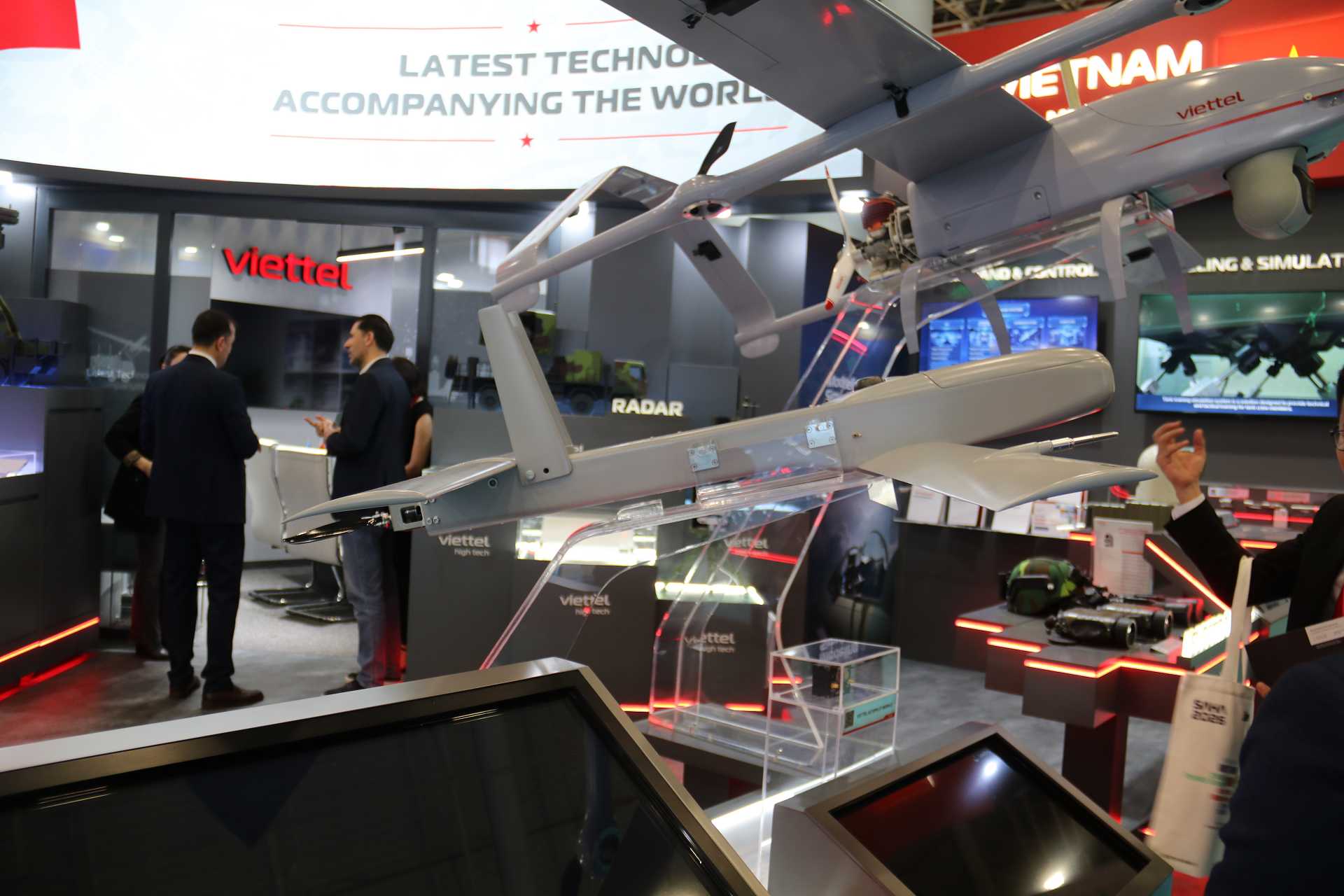
Related Topic: Vietnam Unveils Viettel Recon Drones and Loitering Munitions for High-Intensity WarfareVietnam’s Viettel High Technology Industries Corporation showcases advanced indigenous defense technologies at SAHA Expo 2026, including unmanned aerial vehicles, loitering munitions, radar systems, electronic warfare equipment, and integrated battlefield command solutions. (Picture source: Army Recognition Group)
While the Vietnamese company Viettel drew significant attention with its new VTUAV reconnaissance unmanned aerial vehicles and tactical loitering munition systems, the broader significance of Viettel’s presence at Saha Expo 2026 lies in the diversity of its defense portfolio. The exhibition highlighted Vietnam’s effort to establish sovereign production capabilities across multiple strategic military sectors at a time when governments worldwide are accelerating investments in domestic defense industries and reducing dependence on foreign suppliers.
According to the company’s official presentation, Viettel High Tech has established a complete industrial ecosystem covering research, design, production, integration, and commercialization of advanced military technologies. The company states that it has mastered more than 300 core technologies and secured over 250 patents while progressively expanding toward export-oriented defense products adapted to modern network-centric warfare requirements.
One of Viettel’s defining advantages comes from its dual-use technology structure. Unlike many traditional defense manufacturers, the company leverages expertise from Vietnam’s largest telecommunications operator to accelerate innovation in artificial intelligence, secure data transmission, autonomous systems, digital battlefield networking, 5G infrastructure, and advanced command-and-control architectures. This integration allows Viettel to combine military-grade communications, sensor fusion, and electronic warfare capabilities into interconnected operational systems designed for highly digitized combat environments.
Exclusive interview with Viettel at SAHA Expo 2026 showcasing Vietnam’s latest defense technologies, including reconnaissance UAVs, loitering munitions, air-defense radars, electronic warfare systems, secure communications, and C5ISR solutions. (Video source Army Recognition Group)
At Saha Expo 2026, radar systems represented another major pillar of Viettel’s defense activities. The company develops mobile three-dimensional air-defense radars, fire-control radars, low-altitude surveillance radars, and critical infrastructure protection systems capable of detecting aircraft, cruise missiles, unmanned aerial vehicles, and maritime threats. Several radar systems reportedly use active electronically scanned array technology intended for integration into Vietnam’s broader C4ISR and integrated air-defense network.
The growing importance of these radar systems reflects the changing nature of modern warfare, where air-defense networks must increasingly detect small unmanned aerial vehicles, low-signature cruise missiles, and rapidly maneuvering threats operating in contested electromagnetic environments. Similar trends are driving major investments across the United States, NATO, and Indo-Pacific defense markets, particularly following lessons learned from the war in Ukraine and increasing concerns over drone saturation attacks.
Electronic warfare has also become a central component of Viettel’s long-term strategy. Since entering the electronic warfare sector in 2014, the company has developed signal intelligence and jamming systems capable of detecting, locating, identifying, and disrupting enemy radar emissions and communications across land, naval, and aerial operational environments. These capabilities are becoming strategically critical as modern military operations rely increasingly on networked sensors, drones, satellite navigation, and digitally connected precision-strike systems vulnerable to electromagnetic disruption.
At Saha Expo 2026, Viettel’s emphasis on electronic warfare highlighted how battlefield dominance is no longer determined solely by kinetic firepower but increasingly by control of the electromagnetic spectrum. Modern combat operations now require integrated systems capable of detecting hostile emissions, protecting friendly communications, disrupting enemy command networks, and defending against unmanned aerial vehicle threats operating in highly contested electronic environments.
The company’s activities in secure military communications and C5ISR architectures further reinforce this approach. Viettel develops command-and-control systems designed to support real-time battlefield coordination, intelligence sharing, sensor integration, and operational decision-making across multiple domains. These technologies are intended to strengthen interoperability between reconnaissance systems, radar networks, electronic warfare assets, and combat units while improving battlefield situational awareness and reaction speed.
Cyber defense has emerged as another strategic growth sector within Viettel’s military portfolio. As armed forces become increasingly dependent on digital infrastructure and networked operations, protection against cyber intrusion and electronic attacks has become a core requirement for modern military readiness. Viettel’s telecommunications background provides the company with substantial expertise in secure network management, encryption, and digital infrastructure protection applicable to both military and national security missions.
In the unmanned systems sector, Viettel has progressively expanded from lightweight reconnaissance drones toward more advanced tactical strike systems and loitering munitions. The unveiling of the VTUAV reconnaissance drones and loitering munition systems at Saha Expo 2026 reflects the company’s objective to develop indigenous unmanned aerial vehicles comparable to leading international systems while supporting the operational modernization requirements of the Vietnam People’s Army.
Vietnam’s broader defense-industrial strategy increasingly mirrors trends visible in countries such as Turkey, South Korea, and Poland, where governments have prioritized sovereign development of key military technologies to preserve wartime resilience, maintain industrial autonomy, and reduce exposure to foreign supply-chain disruptions. Viettel has become central to this strategy by reinvesting commercial telecommunications revenue into high-technology military research and development programs.
The company’s growth also reflects major shifts occurring across the global defense market. The war in Ukraine, rising Indo-Pacific tensions, and the growing importance of autonomous warfare have accelerated demand for affordable radars, tactical drones, electronic warfare systems, secure communications, and mobile battlefield technologies capable of rapid domestic production. Viettel’s focus on compact high-technology military systems positions the company within one of the fastest-growing sectors of the international defense industry.
International partnerships are also becoming increasingly important to Viettel’s ambitions. Cooperation agreements with foreign defense firms, including European manufacturers, indicate the company’s intention to integrate into the global defense supply chain while expanding export opportunities. Analysts increasingly view Viettel not only as Vietnam’s principal defense technology company but also as an emerging regional competitor in the market for cost-effective high-technology military systems adapted to modern multidomain warfare environments.
Written by Alain Servaes – Chief Editor, Army Recognition Group
Alain Servaes is a former infantry non-commissioned officer and the founder of Army Recognition. With over 20 years in defense journalism, he provides expert analysis on military equipment, NATO operations, and the global defense industry.
-
Malaysia Boosts Defense Modernization with Drones and Havelsan Integrated C4I Combat Networks
{loadposition bannertop}{loadposition sidebarpub}
Türkiye’s HAVELSAN showcased an integrated all-domain command-and-control architecture at DSA 2026 in Kuala Lumpur, demonstrating how naval, land, and air operations can be fused into a single network to accelerate combat decision-making, as presented during the fourth day of the exhibition. The concept matters because it directly targets faster coordination and response across multiple domains, strengthening Malaysia’s ability to detect, decide, and act against threats while reinforcing Türkiye’s growing defense footprint in Southeast Asia.
The system centers on reducing the sensor-to-shooter timeline by combining inputs from ships, ground forces, aircraft, radars, electro-optical systems, and unmanned platforms into one shared operational picture. This integration enables quicker target engagement, tighter force synchronization, and improved situational awareness, reflecting a broader shift toward networked warfare and real-time battlefield management.
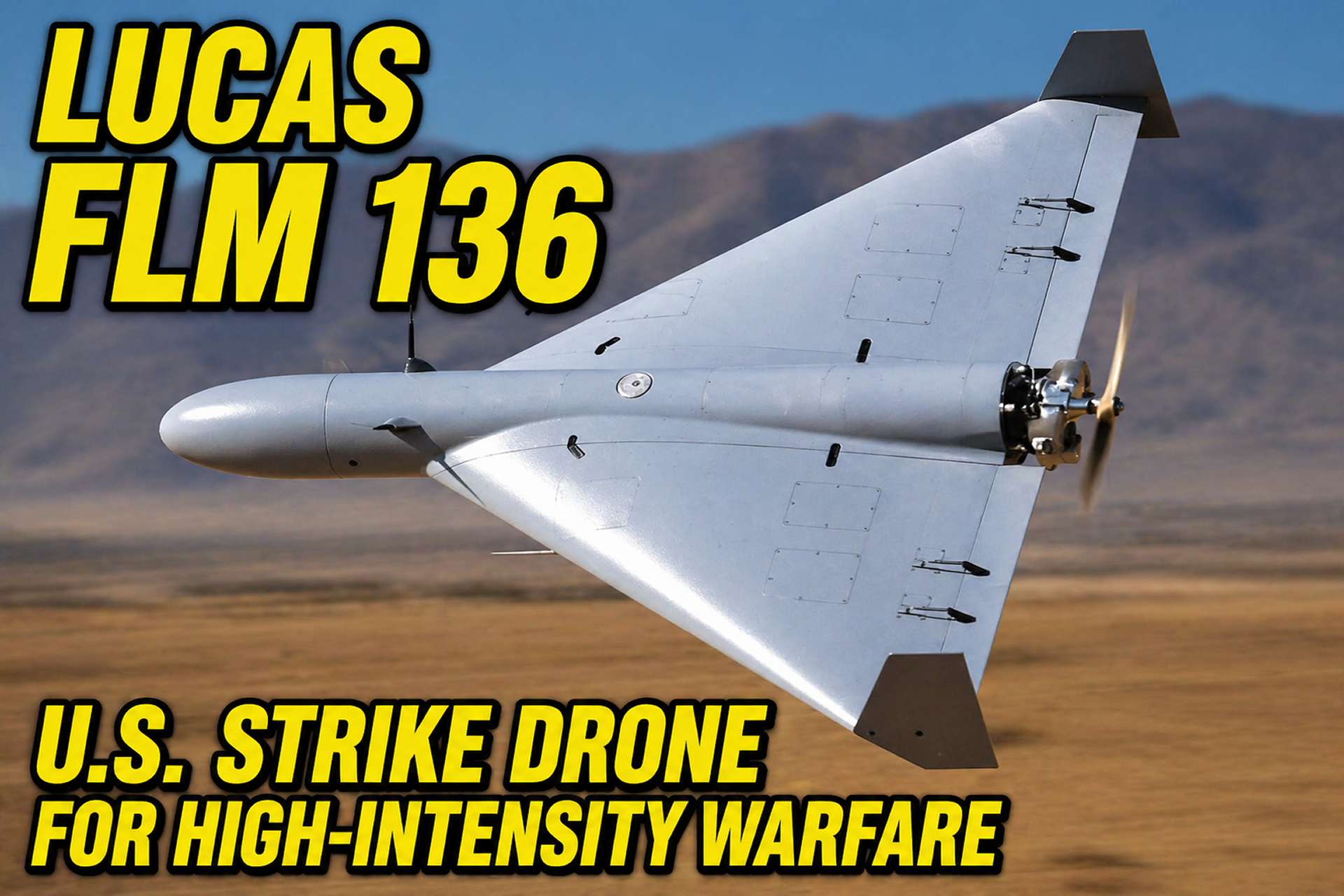
Related topic: U.S. Deploys Combat Proven LUCAS FLM 136 Loitering Munition for Low-Cost Strike Saturation
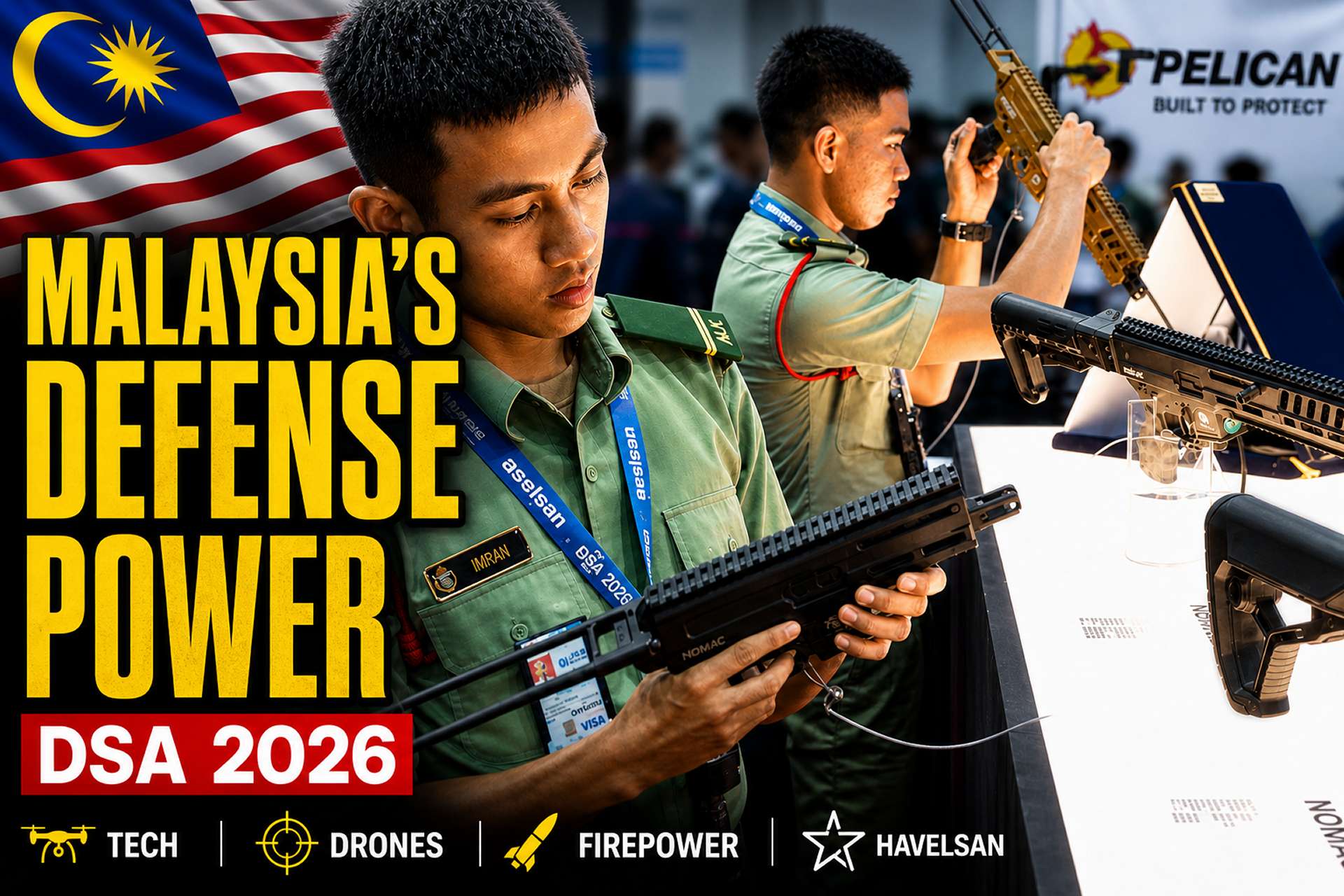
C4I systems, unmanned vehicles, and small arms on display at DSA 2026 highlight Malaysia’s push for multi-domain operations, advanced capabilities, and strengthened defense industrial partnerships (Picture source: Armt Recognition Group).
The naval element of HAVELSAN’s portfolio is especially relevant for Malaysia, a maritime nation with critical interests in the Strait of Malacca, the South China Sea, and surrounding exclusive economic zones. HAVELSAN’s ADVENT combat management system is a modular C4I solution for naval command requirements, while its broader command-and-control portfolio includes air, land, submarine, tactical data link, and maritime surveillance applications.
For naval forces, this type of architecture improves more than situational awareness. It allows frigates, offshore patrol vessels, coastal sensors, unmanned surface vessels, and maritime patrol aircraft to operate as a connected force. That connection is decisive in anti-surface warfare, maritime interdiction, mine countermeasure missions, and port security, where detection time and engagement coordination often determine tactical success.
On land, HAVELSAN’s C4I approach supports distributed battlefield command. A land force equipped with networked command posts, reconnaissance drones, unmanned ground vehicles, and digital fire-control tools can coordinate maneuver units more efficiently and reduce the delay between detection and engagement. For armies operating in jungle, littoral, or urban terrain, this can improve tactical responsiveness and reduce the risk of isolated units acting without a complete operational picture.
The air component adds another layer by integrating airborne surveillance, command aircraft, and tactical data links into the same information environment. When air defense units, aircraft, ground commanders, and naval units share data, the result is stronger joint interoperability. For Malaysia and other regional forces, this is important because future crises are unlikely to remain confined to one domain.
HAVELSAN also highlighted unmanned systems such as the BARKAN unmanned ground vehicle and the SANCAR armed unmanned surface vessel. BARKAN is a medium-class tracked unmanned ground vehicle weighing about 400 kg without payload, with a 200 kg payload capacity, electric propulsion, a maximum speed of 12 km/h, and at least three hours of operating time.
The tactical value of BARKAN lies in its ability to perform reconnaissance, surveillance, route security, combat support, and high-risk missions without exposing soldiers to direct fire. Fitted with electro-optical sensors and a remote-controlled weapon station, the vehicle can support infantry units in urban operations, perimeter defense, and forward observation tasks. Its modular design also allows adaptation for logistics, casualty evacuation support, or explosive ordnance missions, depending on the payload.
SANCAR brings the same unmanned logic to the maritime environment. The armed unmanned surface vessel measures 12.7 meters in length and 3.3 meters in beam, displaces around 9 tons, uses twin diesel engines with twin waterjets, and reaches speeds above 40 knots. It offers a range of approximately 400 nautical miles at 10 knots and can operate up to Sea State 4, giving the vessel the endurance and seakeeping needed for patrol, surveillance, and coastal combat missions.
Its armament and mission systems are central to its relevance. SANCAR can be fitted with a 12.7 mm remote-controlled weapon station for close-range surface threats and force-protection missions, while configurations can include guided missile options for heavier anti-surface engagements. Combined with electro-optical sensors, autonomous navigation, collision avoidance, and command-and-control links, the vessel can operate ahead of crewed ships to scout, screen, or engage threats in contested waters.
For Malaysia, systems such as SANCAR are relevant because they support persistent maritime security without placing crews at unnecessary risk. Armed unmanned surface vessels can patrol harbor approaches, monitor suspicious craft, escort higher-value naval units, and conduct reconnaissance in areas where mines, fast attack craft, or coastal missiles could threaten crewed vessels. Their main tactical advantage is not only firepower, but the ability to extend surveillance and response options at lower risk.
The industrial dimension was also prominent. HAVELSAN identified Asia as a strong market and emphasized technology transfer and integration with local systems. This is a crucial point for Southeast Asian armed forces, which increasingly seek more than imported equipment. They want local maintenance, software adaptation, national data control, and the ability to integrate foreign systems into existing command networks.
Malaysia’s Ministry of Defence used DSA 2026 to promote strategic initiatives aimed at enhancing domestic defense industry capabilities. This aligns with a broader regional trend in which procurement is judged not only by immediate military value, but also by its contribution to sovereign industrial capacity, skilled employment, and long-term sustainment. For Kuala Lumpur, cooperation with foreign defense companies is most valuable when it strengthens local engineering, production, and integration expertise.
MEGA ARMS added a small-arms dimension to the day’s coverage, presenting shotguns, machine guns, and infantry weapons while emphasizing partnerships with Türkiye. In operational terms, this segment matters because small arms remain the basic layer of military and law-enforcement capability. Shotguns support breaching, close protection, and internal security missions, while machine guns provide suppressive fire, area denial, and sustained infantry firepower.
The presence of Turkish-linked small arms also reflects the maturity of Türkiye’s defense export ecosystem. Beyond command systems and unmanned vessels, Turkish industry has built strong export momentum in weapons, ammunition, remote weapon stations, armored vehicles, and electronics. For Malaysian users, the tactical appeal lies in obtaining modern weapons supported by adaptable supply chains and potential local cooperation.
The fourth day of DSA 2026 showed that Malaysia’s defense modernization is increasingly focused on integration rather than isolated procurement. C4I systems, unmanned ground vehicles, armed unmanned surface vessels, and infantry weapons each answer different operational needs, but their real value grows when connected through a national command architecture. The future battlefield will reward forces that can see first, decide faster, and coordinate effects across land, sea, and air.
-
Discover Iran's Rezvan Kamikaze Drone Transforming Close-Range Tactical Strike Operations
{loadposition bannertop}{loadposition sidebarpub}
Iran has introduced the Rezvan loitering munition, a short-range kamikaze drone designed to deliver precision strikes within a 20 km radius, strengthening its ability to hit targets directly inside the tactical battlespace. This capability increases pressure on forward-deployed forces and enhances Iran’s ability to conduct localized, hard-to-detect strikes in contested environments.
The Rezvan can detect, track, and strike targets autonomously, giving small units a responsive and low-cost precision attack option with minimal exposure, as further illustrated in a DefenseWebTV video highlighting its design and operational use. Its deployment reflects a broader shift toward distributed, drone-led warfare focused on rapid engagement, survivability, and persistent close-range threat projection.
Related Topic: Iran Deploys Yak-130 Trainer Jets Armed With Air-to-Air Missiles for Drone Interception Patrols
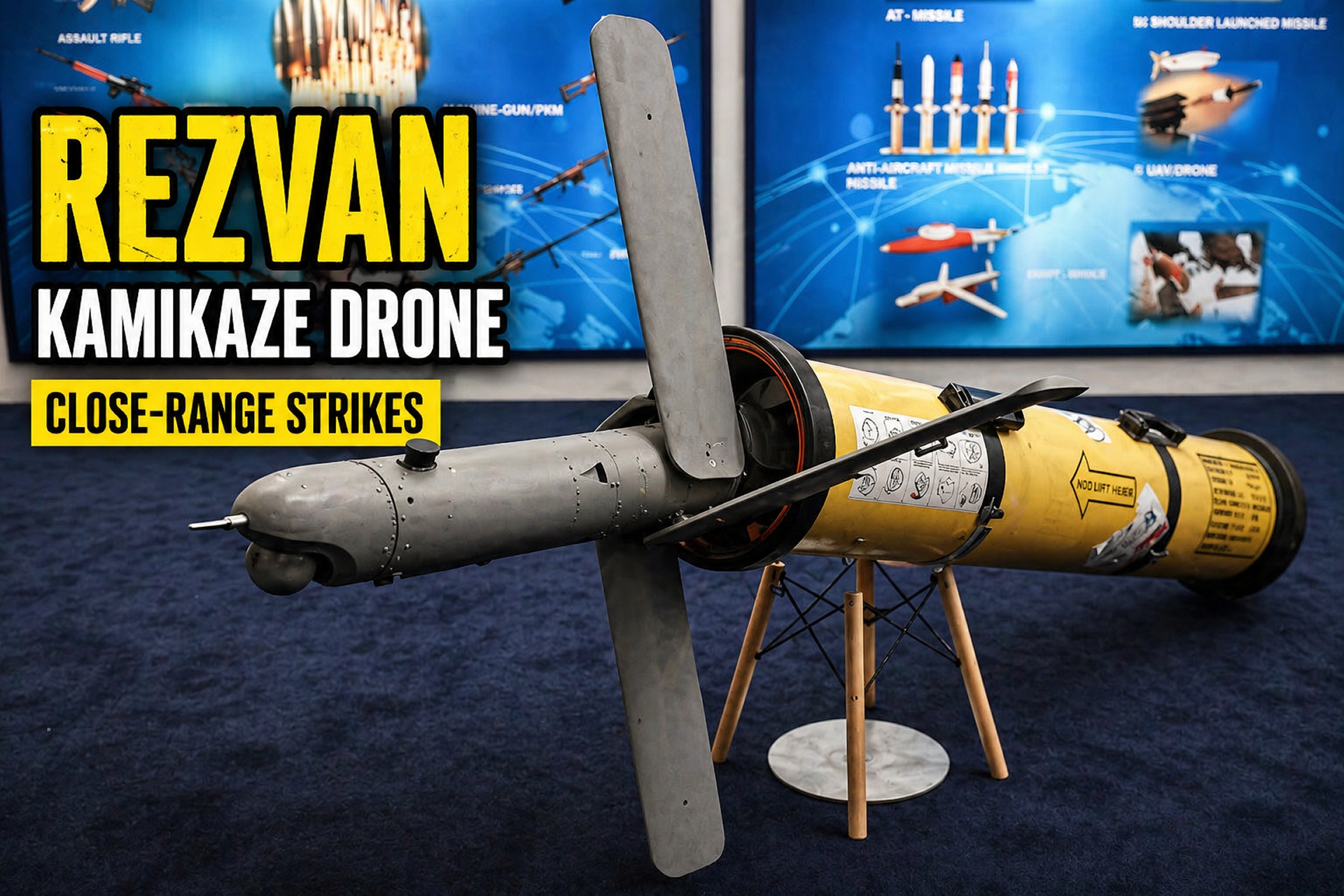
Iran has fielded the Rezvan loitering munition, a short-range kamikaze drone capable of detecting and striking targets within a 20 km radius to strengthen its tactical battlefield precision strike capability (Picture source: Army Recognition, protected illustration, reproduction prohibited without permission)
The Rezvan is designed for close-range battlefield use rather than long-range strategic attack. Its role is centered on rapid engagement of targets such as maneuver units, logistics convoys, forward operating positions, command posts, radar systems, and other exposed assets. By combining surveillance and strike functions in a single platform, the drone can reduce the time between detection and engagement, creating a tactical threat that may be difficult to anticipate in areas where ground forces are moving, staging, or conducting resupply missions. For U.S. and allied forces deployed in the region, the 20 km range is particularly relevant because it places forward bases, patrol routes, logistics points, and temporary staging areas within reach of a system that may be easier to conceal and deploy than larger unmanned platforms.
Army Recognition’s technical observations indicate that the Rezvan uses a canisterized, tube-launched architecture, allowing it to be deployed from vehicles or concealed positions. This configuration is intended to reduce launch exposure and support rapid repositioning after firing. The munition is estimated to weigh around 41 kg and to carry a 24 kg HEAT-fragmentation warhead, giving it potential effectiveness against light armored vehicles, personnel, and infrastructure. Its fixed forward canards, cylindrical fuselage, folding rear pusher propeller, and likely electro-optical TV seeker suggest an operator-in-the-loop guidance concept, enabling target identification and terminal control during the final phase of attack.
With an estimated range of 20 km and endurance of about 20 minutes, the Rezvan appears optimized for tactical proximity rather than prolonged loitering. This design choice reflects a focus on immediate battlefield relevance, where speed of deployment, portability, and the ability to strike within a limited area may be more important than extended persistence. In this role, the drone could be used to monitor movement corridors, identify vulnerable vehicles in a convoy, or engage selected targets inside forward operating areas with limited warning. Unlike longer-range Iranian systems designed for strategic or operational-level strikes, the Rezvan appears to be positioned as a tactical loitering munition intended for use closer to the front line or near exposed military infrastructure, suggesting that Iran is building a layered unmanned strike capability covering several ranges and mission profiles.
The system also fits into a wider trend observed in recent conflicts, where loitering munitions have changed the relationship between detection and strike. By integrating reconnaissance, target acquisition, and attack capability into one expendable platform, these systems allow smaller units to generate effects that previously required more complex coordination between sensors and fire-support assets. For forces operating under the threat of such drones, this can increase pressure on counter-UAS systems, force greater dispersion, and complicate the protection of logistics, command nodes, and air defense components. The Rezvan therefore represents not only a new drone in Iran’s arsenal, but also a tactical tool that could contribute to saturation, disruption, and persistent low-altitude pressure in contested environments.
The DefenseWebTV video adds a visual layer to the analysis by presenting the Rezvan not only as a new Iranian drone, but as part of a wider operational pattern in which compact loitering munitions are increasingly used to threaten forward-deployed forces. Through imagery and technical commentary, the video helps identify the main elements of the system’s configuration, including its tube-launched design, compact airframe, and short-range strike profile. This format allows viewers to better understand how such a drone could be deployed from concealed positions, mobile platforms, or dispersed tactical units, while also showing how Iran’s drone doctrine continues to emphasize mobility, simplified deployment, and rapid engagement.
Rezvan illustrates how Iran continues to expand its unmanned arsenal with systems suited to its doctrine of asymmetric warfare. The drone’s apparent simplicity, portability, and limited dependence on complex networked infrastructure could make it relevant not only for Iranian forces but also for affiliated actors operating in Iraq, Syria, the Gulf region, or other areas where short-range drone threats can be used to challenge more conventional military forces. Its introduction reinforces the growing importance of low-altitude, expendable strike systems in modern conflict environments and highlights the need for layered counter-drone defenses capable of detecting and neutralizing small threats within short reaction times.
The Rezvan kamikaze drone does not derive its operational significance from long range, but from its ability to combine proximity, timing, portability, and precision in a single short-range strike system. Its estimated 20 km reach, tube-launched configuration, and operator-guided engagement profile make it a tactical asset designed to complicate ground operations and increase pressure on deployed forces. Readers can watch the DefenseWebTVvideo “Discover Iran’s Rezvan Kamikaze Drone Designed for Close-Range Tactical Strikes” to see a visual breakdown of the system, its estimated characteristics, and its potential role in Iran’s evolving drone warfare strategy.
-
U.S. Deploys Combat Proven LUCAS FLM 136 Loitering Munition for Low-Cost Strike Saturation
{loadposition bannertop}{loadposition sidebarpub}
The United States is advancing a low-cost loitering munition designed to deliver one-way precision strikes in high-intensity combat, expanding its ability to overwhelm defenses and sustain deep attacks. This development signals a shift toward scalable strike systems that can be deployed in large numbers to pressure enemy air defenses and extend reach across contested battlefields.
The LUCASsystem demonstrates how a simple, expendable UAV can be used for precision strikes, air defense saturation, and distributed operations with minimal cost and logistical burden. Its design reflects a broader trend toward massed autonomous capabilities that enhance survivability, increase strike density, and reshape how forces project power in future conflicts.
Related topic: U.S. Conducts First Combat Use of LUCAS Kamikaze Drone During Operation Epic Fury Against Iran.
Lucas FLM 136 loitering munition highlights U.S. efforts to field low-cost, long-range strike drones for high-intensity warfare, combining modular payload options, extended endurance, and precision attack capability (Picture source: Army Recognition Group Edit).
The program gained operational relevance after its rapid transition from Pentagon presentation in July 2025 to combat employment during Operation Epic Fury. That timeline matters because it reflects a shift from slow acquisition cycles toward expendable strike drones that can be produced, deployed, and used at combat tempo.
The FLM 136 is built around a compact fixed-wing airframe measuring about 3 m in length with an 8.2 ft, or 2.5 m, wingspan. The system has a maximum takeoff weight of 180 lb, an empty airframe weight of 70 lb, and a 215 cc carbureted internal combustion engine driving a rear pusher propeller.
The propulsion choice is central to the system’s military value. A small piston engine is cheaper and easier to sustain than a turbine, while still allowing approximately six hours of endurance, a cruise speed of 55 kt, and a dash speed of 100 kt, giving commanders a long-range weapon that can approach from multiple axes before terminal attack.
The armament architecture is one of the most important aspects of the FLM 136. Public data identifies a maximum payload weight of 40 lb, or about 18 kg, carried in a forward mission bay; the exact combat warhead has not been fully disclosed, but this payload class can support high-explosive fragmentation, blast, or shaped-charge effects depending on integration requirements.
This payload size places the FLM 136 below the Iranian Shahed-136 in destructive mass, but it gives the U.S. weapon greater tactical flexibility. Rather than simply copying the Shahed concept, the American design emphasizes open payload architecture, auxiliary bays, and mission adaptability, allowing it to serve as a strike munition, threat emulator, or test vehicle for future sensors and communications.
In strike configuration, the FLM 136 is best understood as a precision attrition weapon rather than a traditional cruise missile. Its role is to attack air defense radars, command posts, logistics nodes, parked aircraft, artillery positions, fuel sites, and lightly protected infrastructure, forcing the enemy to spend expensive interceptors against a comparatively inexpensive target.
Guidance and control are also decisive. Available information describes GPS/INS navigation, electro-optical sensors, and a secure datalink, giving operators the ability to monitor the target area and adjust mission parameters before final attack. This combination supports both pre-planned deep strike and dynamic engagement when the loitering munition finds a higher-value target during flight.
Compared with the Iranian Shahed-136, the FLM 136 is smaller, lighter, and carries a lighter payload, but it appears better aligned with U.S. requirements for modularity, networked control, and rapid integration with joint forces. The Shahed-136 is generally associated with a 30–50 kg high-explosive fragmentation warhead and a larger 200 kg airframe, making it a heavier area-strike weapon with strong psychological and saturation effects.
The tactical value of the Lucas FLM 136 lies in mass, timing, and target economics. A salvo of loitering munitions can compel enemy air defenses to reveal radar emissions, exhaust interceptors, or accept leakage against rear-area targets. This is especially relevant in high-intensity warfare, where survivable manned aircraft and high-end missiles must be reserved for targets that justify their cost.
LUCAS uses open architecture, can be configured for strike or target-drone roles, and has been reported at a cost of around $35,000 per unit, far below high-end reusable unmanned aircraft and long-range cruise missiles. That price point is strategically important because it gives U.S. commanders a way to generate pressure at scale without consuming premium munitions in every engagement.
Lucas FLM 136 loitering munition demonstrates U.S. ship-launched strike drone capability during Operation Epic Fury, with USS Santa Barbara deployment highlighting its role in distributed maritime operations and high-intensity warfare. For the U.S. military, the Lucas FLM 136 is not just a Shahed-inspired copy; it is a sign of doctrinal adaptation. It gives commanders an expendable long-range strike UAV that can absorb risk, complicate enemy defenses, and expand the magazine depth of joint forces in contested theaters where cost, speed of production, and operational mass now matter as much as exquisite performance.
-
Discover South Korea K9MH Mobile Howitzer New Generation Artillery System
{loadposition bannertop}{loadposition sidebarpub}
Hanwha Aerospace has unveiled a wheeled 155mm self-propelled howitzer that boosts artillery survivability and deployment speed, addressing the growing threat of counter-battery fire in high-intensity warfare. By enabling faster movement between firing positions, the system strengthens shoot-and-scoot tactics that are critical to staying alive on modern battlefields.
The K9MH combines higher firing rates with greater automation and road mobility, allowing crews to deliver rapid, sustained fire while minimizing exposure. Its design reflects a broader shift toward more agile and mobile artillery forces capable of supporting dispersed operations and adapting quickly to evolving combat conditions.
Related Topic: South Korea K9MH 155mm Mobile Howitzer Raises Fire Rate to 9 RPM with New Autoloader9 RPM firepower, 8x8 mobility, and full automation redefine modern artillery with the K9 Mobile Howitzer (Picture source: Hanwha USA - Edited by ArmyRecognition)
The K9MH departs from the tracked configuration of earlier variants by adopting a Tatra T815-7 8x8 wheeled chassis. This platform integrates an independent suspension system and a central backbone tube, enabling improved off-road performance while maintaining stability on uneven terrain. As a result, the howitzer can rapidly reposition between firing locations without requiring heavy transport assets, a key advantage for forces operating across dispersed or infrastructure-rich theaters.
The artillery system retains the 155 mm 52-caliber gun standard, ensuring compatibility with NATO ammunition and interoperability with allied forces. This gun configuration allows engagement ranges exceeding 40 kilometers with conventional shells, while extended-range or rocket-assisted munitions can push this distance toward approximately 70 kilometers depending on the projectile used. Such reach provides commanders with the ability to strike deep targets while maintaining stand-off distance from enemy forces.
At the core of the K9MH lies a redesigned automatic loading system that significantly increases firing performance. The new autoloader introduces a dual-feed mechanism that separates the handling of projectiles and propellant charges, allowing parallel processing and reducing loading cycle time. This design enables a sustained firing rate of 8 to 9 rounds per minute, compared to 6 to 8 rounds per minute on the K9A1. In operational terms, the system can deliver a round approximately every 7.5 seconds, placing it among the fastest automated artillery systems currently fielded.
This increased rate of fire directly supports advanced firing techniques such as Multiple Round Simultaneous Impact (MRSI), where several shells are fired along different trajectories to reach the target at nearly the same time. By compressing the delivery window of multiple projectiles, the K9MH enhances lethality against time-sensitive or high-value targets, particularly in environments where rapid engagement is critical.
The system’s architecture also reflects a shift toward greater automation and crew protection. The K9MH features an unmanned turret combined with an armored cabin housing a reduced crew of three. This configuration separates personnel from ammunition handling processes, reducing exposure during firing operations and improving survivability against counter-battery fire, loitering munitions, and drone surveillance. Moreover, automation reduces physical workload and helps maintain consistent performance during prolonged missions.
With an onboard ammunition capacity of 40 rounds, the K9MH is capable of sustaining high-intensity fire missions without immediate resupply. This allows several minutes of continuous engagement at high firing rates, which can prove decisive during the initial phases of artillery strikes or when supporting maneuver units under pressure. The integration of automated handling systems further ensures that firing efficiency remains stable over time, even during extended operations.
However, the emphasis on high firepower and automation introduces certain operational considerations. The system’s withdrawal time after firing is reported to be around 50 seconds, which is longer than some competing wheeled artillery systems. In an environment where counter-battery radars and precision strikes can respond within short timeframes, this factor may influence survivability depending on tactical conditions. Nevertheless, the system’s mobility and rapid redeployment capability help mitigate this constraint once movement is initiated.
Hanwha Aerospace is positioning the K9MH as a candidate for several Western procurement programs, including the U.S. Army’s Mobile Tactical Cannon initiative. The company has also indicated plans to localize production in the United States, particularly in Alabama, aligning with American defense industrial requirements and offset policies. This approach mirrors previous export strategies applied to the K9 family, which has successfully integrated local production models in countries such as Poland.
The broader context of the K9MH’s development reflects a shift in global artillery requirements. Armed forces are increasingly prioritizing systems that combine long-range precision fires with rapid mobility and reduced logistical burden. Wheeled artillery, in particular, offers advantages in terms of strategic and operational mobility, allowing units to self-deploy over long distances without reliance on heavy transport vehicles, while also simplifying maintenance compared to tracked systems.
Moreover, the K9MH enters a competitive landscape that includes systems such as the French CAESAR, the Swedish Archer, and Germany’s RCH 155. While CAESAR emphasizes simplicity and deployability, and Archer and RCH 155 focus on high automation and crew protection, the K9MH appears to position itself between these approaches by combining proven firepower with increased automation and mobility.
With more than 2,000 K9 systems already in service worldwide, Hanwha Aerospace builds on a mature and widely adopted artillery family. The K9MH extends this legacy by integrating targeted improvements aligned with contemporary operational demands, particularly in Europe where the need for responsive and survivable artillery has intensified. As high-intensity conflict scenarios continue to shape procurement priorities, systems capable of delivering rapid, sustained, and mobile fire support are likely to play a central role in future battlefield dynamics.
-
Top 10 defense innovations 2026 in Germany Anti-Armor Missiles and Air Defense Systems for Modern Warfare
{loadposition bannertop}{loadposition sidebarpub}
European defense firms unveiled combat-ready drones, UGVs, and air defense systems at Enforce Tac 2026 in Germany, signaling a decisive push by NATO allies to field capabilities built for high-intensity warfare.
Systems including the Gereon UGV Enforcer, Themis UGV, Spike LR2 missile, and Iris-T SLM X highlight a shift toward survivable, networked, and rapidly deployable force packages. Companies such as KNDS and Milrem Robotics, alongside emerging drone manufacturers, are delivering modular platforms optimized for contested environments, urban combat, and integrated multi-domain operations.
Read also: Enforce Tac 2026 Showcases New Police and Urban Security Technologies.
Enforce Tac 2026 highlights the rapid integration of unmanned systems, precision weapons, and air defense technologies, showcasing how European defense industries are enhancing force protection, operational mobility, and multi-domain interoperability in response to evolving modern threats (Picture source: Army Recognition Group).
Among the most significant themes visible across the event was the rapid normalization of unmanned systems as front-line operational tools rather than experimental niche platforms. The Gereon UGV Enforcer and the Themis UGV, presented through the industrial footprint of KNDS and Milrem Robotics, reflect this shift with particular clarity. These platforms illustrate how ground robotics are now being positioned for a broad mission set that extends beyond reconnaissance to include force protection, logistics support, casualty evacuation, remote weapon carriage, and operations in high-risk or contaminated environments. Their relevance lies not simply in mobility, but in their ability to reduce soldier exposure while extending the tactical reach of small units in contested terrain.
The operational logic behind this trend is compelling. European armed forces and security services increasingly require systems that can operate in urban areas, along critical infrastructure corridors, and in hybrid-threat environments where the distinction between conventional combat and internal security challenges is blurred. UGVs such as Themis answer that requirement by offering modularity, low signatures, and payload flexibility. In a modern engagement, that means commanders can distribute sensors, communications relays, or weapon stations forward without immediately exposing manned crews.
Another notable capability area highlighted in the video is precision engagement. The presence of the Spike LR2 and the Fuchs JAGM integration points to the continued importance of anti-armor and multi-role missile systems in the European theater. These are not merely tactical weapons for isolated target engagements; they are central components of deterrence architectures designed to counter armored maneuver, hardened positions, and fast-moving battlefield threats. The significance of mounting or integrating such capabilities on adaptable platforms is equally important. It expands engagement options, improves platform survivability through standoff, and enables forces to respond faster to emerging targets in dynamic operational settings.
Air and missile defense also featured prominently through the Iris-T SLM X, which symbolizes Europe’s growing urgency in rebuilding layered ground-based air defense capacity. Across the continent, the operational lesson is unmistakable: forces that cannot detect, track, and defeat cruise missiles, UAVs, loitering munitions, and low-flying aircraft face unacceptable vulnerability. The value of systems such as Iris-T SLM X lies in their contribution to a broader defensive network that protects maneuver formations, logistics hubs, command centers, and national critical infrastructure. In practical terms, this is no longer a niche capability reserved for strategic sites; it is becoming an essential component of theater-wide survivability and national resilience.
The interviews featured in the report add industrial depth to the platform displays. TIMTEC, HEIGHT Technologies, Hecto Drone, and VEX collectively represent a defense innovation ecosystem that is increasingly focused on deployable, scalable, and interoperable solutions. HEIGHT Technologies’ emphasis on counter-UAS capability is particularly relevant in light of the rapid proliferation of cheap drones in both state and non-state arsenals. Counter-drone systems are now a baseline requirement for force protection, convoy security, border surveillance, and event security. The challenge for manufacturers is not simply detection, but creating integrated kill chains that combine sensing, identification, electronic attack, and, if necessary, kinetic defeat without overwhelming operators.
Hecto Drone’s presence reinforces another major lesson from current conflicts: tactical UAVs are no longer auxiliary tools, but mission-critical assets for intelligence collection, target acquisition, battlefield awareness, and rapid decision support. The most relevant systems are those that combine endurance, secure data links, ease of deployment, and resistance to jamming. In a battlefield defined by electromagnetic contestation, drone survivability is increasingly tied to software resilience and network design as much as to airframe performance.
The appearance of VEX and the Hungarian Defense and Space Export Agency introduces an important industrial and geopolitical dimension. Defense exhibitions are no longer only product showcases; they are strategic marketplaces where smaller and medium-sized defense economies seek integration into wider European supply chains. Hungary’s effort to strengthen defense and space export visibility reflects a broader regional trend in which national industries aim to move beyond licensed production toward higher-value participation in advanced defense manufacturing, subsystems, and technology partnerships.
What makes the systems featured in this video noteworthy is not simply their technical sophistication, but their alignment with current operational demand. Enforce Tac 2026 shows that the most credible innovations are those that improve survivability, accelerate the sensor-to-shooter cycle, extend tactical reach, and strengthen interoperability across military and security forces. In that sense, the exhibition offers more than a catalog of new products. It provides a clear indicator of where European defense priorities are moving: toward modular unmanned systems, responsive precision fires, layered air defense, and integrated counter-drone solutions capable of functioning in the high-friction environments that now define modern conflict.
-
How Türkiye’s MKE Is Expanding from Counter-Drone Systems to Full Defense Manufacturing
{loadposition bannertop}{loadposition sidebarpub}
At Enforce Tac 2026 in Nuremberg, Army Recognition interviewed Ödül Öden, Regional Manager for Europe and the Americas at Turkish defense company MKE. The discussion outlined the state-owned manufacturer’s industrial structure, export strategy, and its portfolio of weapons, ammunition, counter-drone systems and unmanned naval technologies.
During Enforce Tac 2026 in Nuremberg, Army Recognition interviewed Ödül Öden, Regional Manager for Europe and the Americas at Makine ve Kimya Endüstrisi (MKE), Turkey’s state-owned defense manufacturer operating under the Ministry of National Defense. Öden detailed the company’s industrial structure, expanding export strategy, and the systems showcased at the exhibition, including small arms, ammunition, counter-drone technologies, and unmanned naval platforms designed for both military and law enforcement users. The presentation reflected MKE’s effort to position itself as a comprehensive supplier across multiple defense domains while increasing its presence in European and American markets.
Follow Army Recognition on Google News at this linkMKE outlines its export push into Europe and the Americas, showcasing small arms, ammunition, and counter-drone systems at Enforce Tac 2026. (Picture source: Army Recognition)
MKE traces its institutional origins back several centuries to the Ottoman period and today operates as one of Türkiye’s central defense manufacturers. The company produces more than 470 different defense products and exports its equipment to more than 105 countries worldwide. According to Öden, many of the systems displayed at Enforce Tac are already in service with the Turkish Armed Forces, providing operational validation before they are offered to allied and partner countries.
During the interview, Öden emphasized the company’s vertically integrated industrial model, which allows MKE to control the entire production chain from raw materials to finished weapons and ammunition. The company operates eleven factories across Türkiye. Five of these facilities produce finished defense systems, while the remaining six focus on manufacturing strategic raw materials used throughout the production process.
This structure gives the company a high level of industrial autonomy. MKE manufactures propellants required for ammunition production, including single-base, double-base, and triple-base powders. In addition, the company is the only entity in Türkiye authorized to collect and recycle strategic scrap metals from government institutions. These materials are processed into steel and brass, which are then reused to manufacture ammunition casings and weapon components. This approach secures supply chains while maintaining strict control over production quality.
At Enforce Tac, MKE presented a wide portfolio of small arms designed and manufactured entirely by its own engineering teams. The weapons on display included 7.62 mm NATO general-purpose machine guns, .50 caliber anti-material sniper rifles, submachine guns, grenade launchers, and several families of assault rifles developed for military and security forces.
Among the systems highlighted during the interview was a multi-caliber sniper rifle capable of switching between 7.62 mm NATO and 8.59 mm calibers. The conversion can be performed in a few minutes by replacing the bolt mechanism, magazine, and barrel, allowing operators to adapt the weapon to different operational environments. The system is designed to deliver long-range precision while maintaining modularity for specialized units.
Another weapon presented by MKE was the BORAN sniper rifle, which is currently used by the Turkish Armed Forces. Designed for high-precision engagements at extended ranges, the rifle forms part of the company’s broader sniper and designated marksman weapon portfolio. A significant portion of the exhibition space was dedicated to ammunition, reflecting MKE’s long-standing expertise in this field. The company produces small arms ammunition ranging from 5.56 mm up to 20 mm, alongside medium and large caliber munitions. Systems presented at the exhibition included 25 mm anti-aircraft ammunition, 155 mm tank ammunition, and mortar ammunition in 60 mm and 81 mm calibers. Several of these munitions incorporate extended-range capabilities intended to increase operational reach and battlefield flexibility.
MKE also manufactures heavy weapons designed to support infantry and ground forces. Among these systems is a 12.7 mm heavy machine gun equipped with a quick-change barrel system, allowing sustained fire during prolonged engagements while preventing overheating. The company also produces 40 mm automatic grenade launchers, which provide infantry units with area suppression capability and the ability to engage targets behind cover.
During the interview, Öden also addressed the growing threat posed by unmanned aerial systems and the need for specialized countermeasures. MKE recently developed 12.7 mm and 20 mm counter-drone ammunition designed to neutralize small unmanned aerial vehicles increasingly used in reconnaissance and attack missions. Beyond ammunition solutions, the company presented the TOLGA Short-Range Air Defense System, designed to counter mini and micro UAV threats using a layered defense concept. The system integrates both soft-kill and hard-kill capabilities to protect sensitive areas and critical infrastructure.
Detection is performed through radar capable of identifying small drones at distances of approximately 4 to 5 kilometers, even while the system is moving. Once a target is detected, electronic warfare measures attempt to neutralize the drone through jamming. However, some UAVs cannot be disrupted electronically, particularly those controlled via fiber-optic communication links. For these cases, the system integrates hard-kill weapons ranging from 12.7 mm to 30 mm calibers, allowing the drone to be physically destroyed.
Operational testing conducted in 2025 evaluated the system across 24 different engagement scenarios, demonstrating its ability to neutralize multiple drone threats under varied conditions. A second live demonstration is scheduled for March 2027, while MKE has already signed several international contracts related to the system.
The company also presented its PIRANA kamikaze unmanned surface vessel (USV), developed for swarm attack operations in maritime environments. The platform can carry up to 65 kilograms of explosives, reach speeds exceeding 50 knots, and operate at ranges greater than 200 nautical miles. Its low-profile design reduces radar detection by maintaining a minimal height above the sea surface, allowing it to approach targets with reduced observability.
MKE supplies the explosives, fuses and warheads integrated into the system, reflecting the company’s broader expertise in energetic materials and munitions manufacturing. Öden also highlighted the company’s growing role in international industrial cooperation. MKE currently supports defense production in partner countries through technology transfer and local manufacturing initiatives. According to the company, ten ammunition production lines have already been established across eight countries, enabling partners to develop domestic manufacturing capabilities.
These production lines are built using Turkish-developed machinery. A single production line dedicated to 9 mm ammunition can produce approximately 20 million rounds per year, while other lines can be configured for larger calibers depending on customer requirements. MKE provides engineering assistance, training, and technical expertise to help partners establish sustainable domestic production capacities.
Through its presence at Enforce Tac 2026 and the interview conducted with Army Recognition, MKE emphasized its ambition to position itself not only as a supplier of weapons and ammunition but also as a comprehensive defense industry partner capable of supporting the entire industrial chain, from raw materials and engineering expertise to operational weapon systems and international technology transfer.
-
Guardiaris Showcases Deployable Mobile Training Center for Small-Arms and Anti-Tank Simulation
{loadposition bannertop}{loadposition sidebarpub}
Guardiaris presented its Mobile Training Center at Enforce Tac 2026 in Nuremberg, a deployable simulation system designed to bring small-arms and anti-tank training directly to dispersed or deployed units. The concept reflects a wider shift in military training toward mobile, networked simulation environments that reduce reliance on fixed ranges while improving readiness and data-driven performance analysis.
Guardiarisused Enforce Tac 2026 in Nuremberg to highlight how its Mobile Training Center can bring tactical small-arms and anti-tank training directly to deployed or dispersed units, reducing reliance on fixed infrastructure and accelerating readiness cycles. Presented during the 23 to 25 February 2026 edition of Germany’s leading trade fair for security and defence, the system reflects Guardiaris’ broader role in the defense sector as a developer of military simulation solutions spanning small arms, anti-tank weapons, vehicles, drone operator training, and networked synthetic environments built around its in-house GUARD simulation engine. In the interview recorded at Enforce Tac 2026, the Mobile Training Center stands out not as a simple trailer-based simulator, but as a deployable training capability designed to push immersive rehearsal, instructor control, and performance analysis closer to the operational user.
Follow Army Recognition on Google News at this linkGuardiaris showcased its Mobile Training Center at Enforce Tac 2026, presenting a deployable simulation system designed to bring small-arms and anti-tank training directly to frontline and dispersed units (Picture source: Army Recognition Group).
More broadly, Guardiaris operates in defense as a specialist in custom military training and simulation systems built around its proprietary software and patented laserless LED architecture. Its portfolio covers small-arms training systems, vehicle and remote weapon station simulators, anti-armour trainers, anti-aircraft trainers for MANPADS gunners and aircrews, mortar and artillery observer training solutions, and drone operator simulation. The company also places emphasis on interoperability through HLA-compatible networking, allowing multiple simulators to be connected into a shared synthetic environment. That is an important differentiator for armed forces that increasingly want integrated collective training rather than isolated marksmanship or classroom-only tools. Guardiaris has also shown signs of expanding from a niche technology provider into a company capable of program-level delivery, with training systems linked to military users in Slovenia and other regional markets.
In that context, the Mobile Training Center is not just another containerized simulator. Guardiaris's attempt to compress a tactical range, instructor station, storage area, and synthetic battlefield into an expandable hydraulic trailer that can be towed by a standard truck and made operational in less than an hour. The concept is straightforward but operationally relevant. Instead of moving personnel to a permanent simulation site or live range, the training system itself is brought to the unit. The trailer is presented as a structurally independent and energetically autonomous package equipped with an internal generator, optional external power connection, full air conditioning, and air, dust, and smoke filtration. Inside, it integrates an LED wall, immersive sound, a sound floor that generates haptic feedback, secure weapon storage, and an instructor console for scenario control and post-exercise analysis.
The core training effect comes from the fusion of several Guardiaris technologies. At the center is the company’s small-arms training architecture, which supports individual and squad-level instruction with both small arms and anti-tank weapons. This is paired with an LED-based laserless positioning device that can be mounted on a Picatinny rail or installed inside modified real weapons or replicas, enabling unconstrained movement and detailed six-degree tracking. The wider GUARD simulation environment supports terrain generation from real-world data, rapid scenario creation, instructor supervision, and detailed after-action review. Guardiaris also highlights vital-sign monitoring and performance tracking, suggesting that the system is designed to assess not only shooting results but also broader human-performance factors under stress.
What makes the Mobile Training Center relevant is the operational logic behind the architecture. A mobile simulator only matters if it reduces training friction while preserving realism, repetition, and measurable outcomes. Guardiaris appears to address that equation directly. By pre-installing the hardware, enabling fast setup, and keeping the system self-powered, it reduces dependence on fixed ranges and dedicated training buildings. Using real or replica weapons and pairing them with robust analytics, it gives instructors a path from rehearsal to immediate correction without consuming live ammunition for every repetition. That matters not only for active maneuver units, but also for reserve, territorial, and homeland defense forces that need regular access to tactical drills without the cost of permanent infrastructure.
The broader significance is that the Mobile Training Center should not be seen as a standalone product. It fits into a larger trend in military training toward distributed, repeatable, data-rich preparation that can be deployed closer to the unit and adapted to multiple mission sets. Because the wider Guardiaris ecosystem can link small-arms, anti-tank, vehicle, air-defense, and other simulators into one synthetic framework, the MTC can serve as an entry point into a larger training architecture. That gives it value beyond the trailer itself. It becomes part of a readiness model in which mobility, interoperability, and performance analytics matter as much as visual immersion. For forces seeking more readiness per training day and more flexible access to tactical rehearsal, Guardiaris’ Mobile Training Center is a credible capability worth watching.
-
Russia Introduces Sarma 300mm MLRS Rocket Launcher for Long-Range Precision Deep Strike
{loadposition bannertop}{loadposition sidebarpub}
Russia is fielding the Sarma 300 mm long-range multiple launch rocket system to strengthen its deep-strike fire architecture and modernize heavy rocket artillery units. The system is intended to extend precision engagement beyond traditional tube artillery ranges, reinforcing Russia’s operational depth strike capacity in high-intensity conflict scenarios.
Russia is introducing the Sarma 300 mm long-range multiple launch rocket system as part of a broader effort to modernize its deep-strike fire network and enhance the mobility and survivability of heavy rocket artillery formations. Positioned as a next-generation platform, Sarma is designed to complement and, if needed, evolve existing Tornado-S and legacy BM-30 Smerch units by improving rapid deployment and delivering high-volume, precision strikes against targets at operational depth. Russian defense industry sources describe the system as optimized for sustained high-intensity warfare, emphasizing extended range, faster displacement, and improved accuracy compared to earlier 300 mm-class systems.
Follow Army Recognition on Google News at this linkRussia’s Sarma 300 mm multiple launch rocket system is a next-generation heavy rocket artillery platform designed to deliver long-range saturation and precision strikes beyond 100 km, enhancing deep-fire capability, mobility, and survivability within Russia’s modernized artillery forces. (Picture source: Rosoboronexpor)
The emergence of the Sarma MLRS (Multiple Launch Rocket System) reflects Russia’s continued prioritization of long-range rocket artillery as a central component of its ground forces doctrine. Since the beginning of large-scale combat operations in Ukraine, Russian forces have relied extensively on massed rocket fires for counter-battery missions, suppression of air defenses, and destruction of logistics nodes. The development of a new 300 mm launcher indicates an effort to refine survivability and increase strike flexibility in response to counter-battery radars, long-range precision fires, and drone-enabled targeting systems employed by adversaries.
Technically, the Sarma system is reported to operate within the established 300 mm rocket family used by the BM-30 Smerch and Tornado-S rocket launchers, suggesting compatibility with both unguided high-explosive rockets and guided munitions equipped with satellite-based navigation correction. Modern Russian 300 mm rockets typically support ranges exceeding 70 kilometers in standard configurations. At the same time, advanced guided variants associated with Tornado-S are assessed to reach well beyond 100 kilometers depending on payload and trajectory profile. If Sarma maintains interoperability with these munitions, it would provide commanders with both area saturation capability and precision engagement options against hardened or time-sensitive targets.
Visual materials and preliminary technical descriptions indicate that Sarma may be mounted on a modernized high-mobility wheeled chassis, potentially improving cross-country performance and reducing repositioning time after firing. Enhanced automated fire control systems are also likely to be integrated, enabling faster target-acquisition cycles, digital mission planning, and networked coordination with reconnaissance assets, such as unmanned aerial systems. These features are critical in contemporary artillery duels, where survivability depends on minimizing exposure between launch and displacement.
Operationally, a refined 300 mm launcher strengthens Russia’s layered fires concept. Heavy rocket artillery occupies a niche between tactical ballistic missiles and conventional tube artillery. It delivers greater payload mass and wider area coverage than 152 mm howitzers, while offering more cost-efficient salvo employment than short-range ballistic systems. In high-intensity warfare, this capability is particularly effective against logistics hubs, troop concentrations, air defense batteries, and command posts located in the operational depth. If integrated into automated reconnaissance-strike complexes, Sarma could reduce sensor-to-shooter timelines and increase strike accuracy against mobile targets.
From a strategic perspective, the introduction of Sarma underscores Russia’s sustained investment in artillery modernization despite industrial and economic constraints imposed by sanctions. The 300 mm segment remains one of the most impactful conventional strike tools in the Russian Ground Forces inventory. Enhancements to guidance, reload speed, and digital integration would improve deterrence credibility along NATO’s eastern flank by extending the reach of ground-based fires without triggering an immediate escalation to missile forces. At the same time, the continued evolution of heavy rocket systems reinforces Moscow’s emphasis on massed fires as a compensatory advantage against technologically advanced adversaries.
Industrial implications are also notable. Maintaining production and modernization lines for 300 mm systems supports Russia’s broader defense manufacturing base, including rocket motor production, guidance electronics, and heavy vehicle platforms. If Sarma is intended as a partial successor or parallel platform to Tornado-S, it may reflect lessons learned from battlefield attrition and maintenance cycles observed during ongoing operations.
The near-term outlook will depend on confirmed deployment patterns, production scale, and munition compatibility. Should Sarma achieve full integration with precision-guided 300 mm rockets and digital command networks, it would represent a significant reinforcement of Russia’s long-range conventional strike architecture. As artillery remains central to modern land warfare, the evolution of systems like Sarma will directly influence force survivability, operational tempo, and escalation dynamics across contested theaters.
Written by Alain Servaes – Chief Editor, Army Recognition Group
Alain Servaes is a former infantry non-commissioned officer and the founder of Army Recognition. With over 20 years in defense journalism, he provides expert analysis on military equipment, NATO operations, and the global defense industry.
-
Enforce Tac 2026 Showcases New Police and Urban Security Technologies
{loadposition bannertop}{loadposition sidebarpub}
At Enforce Tac 2026 in Nuremberg, Germany, defense and security firms showcased next-generation systems tailored for high-intensity urban operations, from counter-drone defenses to digitally networked tactical gear. The exhibition underscored how European and NATO-aligned forces are shifting investment toward force protection, rapid response, and legally compliant urban security missions.
Enforce Tac 2026 in Nuremberg, Germany, demonstrated a clear pivot in European security planning toward urban-centric defense and law enforcement operations, as observed by the Army Recognition editorial team during its on-site coverage. Exhibitors emphasized integrated force-protection suites, counter-drone technologies, secure tactical communications, and modular equipment designed for dense urban environments rather than conventional battlefields. Systems on display focused on critical infrastructure defense, border security, and counterterrorism missions where response speed, survivability, and legal accountability are equally critical. The event reflected a broader European effort to modernize police, special operations, and homeland security units for increasingly complex urban threat scenarios.
Follow Army Recognition on Google News at this linkOverview of Enforce Tac 2026 exhibition floor highlighting tactical equipment and force protection systems for modern security forces. (Picture source: Army Recognition Group)
The Enforce Tac, a trade fair for security and defence, has evolved into one of Europe’s most operationally focused security exhibitions, serving police tactical units, federal security agencies, border guards, and special intervention forces. Unlike broader defense expos focused on heavy military platforms, Enforce Tac focuses on the equipment officers carry, wear, and deploy in complex domestic security environments. Army Recognition’s coverage prioritized systems that are deployable now or entering procurement cycles, examining how they enhance protection, situational awareness, and mission effectiveness.
A dominant theme in 2026 is modular personal protection. Multiple European and transatlantic suppliers showcased lightweight ballistic armor systems designed to stop rifle-caliber threats while reducing fatigue during prolonged operations. New plate carriers integrate scalable armor inserts, quick-release systems for medical emergencies, and load-bearing configurations compatible with communications and power distribution hubs. Several helmet manufacturers introduced advanced composite shells that offer improved ballistic resistance against handgun and fragmentation threats while keeping overall weight below 1.3 kilograms. Integrated rail systems now support night vision, thermal monoculars, facial protection modules, and compact counter-drone detection sensors.
Counter-unmanned aerial system capability was one of the most strategically relevant trends observed during the tour. Law enforcement agencies across Europe face increasing risks from commercially available drones used for reconnaissance, contraband delivery, and potential explosive attacks. Exhibitors presented portable RF detection units capable of identifying drone control frequencies within several kilometers, as well as handheld and vehicle-mounted jamming systems designed to disrupt command links in compliance with national regulations. Some solutions integrate radar, electro-optical tracking, and artificial intelligence-driven classification software, enabling rapid threat discrimination in crowded urban airspace. The growing presence of these systems reflects a doctrinal shift: airspace control is no longer solely a military responsibility but an emerging law-enforcement mission.
Less-lethal technologies also showed significant innovation. Manufacturers displayed programmable impact munitions, improved electroshock delivery systems, and next-generation irritant-dispersal devices engineered to deliver controlled effects while reducing collateral risk. Smart launchers now incorporate digital round counters, range-estimation aids, and selectable energy outputs to support graduated-response protocols. These developments are particularly relevant for public order units managing large-scale demonstrations where proportionality and accountability are critical.
Optics and targeting systems presented at Enforce Tac 2026 highlight the increasing convergence between military-grade performance and law enforcement requirements. Compact red dot sights with extended battery life exceeding 50,000 hours, multi-reticle holographic systems, and clip-on thermal imagers optimized for short- to medium-range engagements were widely displayed. Several manufacturers emphasized compatibility with patrol carbines and submachine guns commonly used by special response teams. Enhanced low-light capability directly improves threat identification in urban interiors, transport hubs, and subterranean environments.
Secure communications and digital integration form another pillar of capability growth. Encrypted push-to-talk systems, body-worn cameras with real-time streaming, and integrated command software platforms demonstrate the push toward networked policing. Some companies presented wearable hubs that power radios, cameras, GPS trackers, and biometric monitoring devices via a centralized battery system, reducing cable clutter and improving mobility. Real-time data sharing between field operators and command centers enhances coordination during counterterrorism raids or hostage rescue operations, shortening decision cycles and improving officer safety.
Vehicle-based solutions at the exhibition underscored the continued importance of mobility and protected transport. Armored patrol vehicles adapted for urban maneuverability featured ballistic protection against small arms fire and blast mitigation for improvised explosive device scenarios. Modular interiors enable rapid reconfiguration between detainee transport, tactical assault, and medical evacuation roles. For border and rural security forces, off-road-capable platforms equipped with surveillance masts and thermal cameras extend persistent monitoring across challenging terrain.
The strategic significance of Enforce Tac 2026 lies in the alignment between industry innovation and evolving European security realities. Hybrid threats, organized crime networks, radicalized lone actors, and drone-enabled disruption are reshaping internal security doctrine. The systems showcased reflect a recognition that law enforcement agencies increasingly operate in environments once associated with low-intensity conflict. Equipment must therefore combine military-grade protection with strict adherence to domestic legal frameworks and rules of engagement.
For the defense industrial base, the exhibition illustrates sustained investment in dual-use technologies adaptable for both military and law enforcement markets. Suppliers are designing modular systems that can transition between armed forces and internal security customers with minimal modification, strengthening industrial resilience and expanding export opportunities within NATO and partner nations.
Looking ahead, procurement decisions across Europe will likely prioritize integrated capability packages rather than standalone equipment purchases. Agencies are seeking interoperable ecosystems linking personal protection, communications, sensors, and mobility assets into cohesive operational networks. Enforce Tac 2026 demonstrates that the modernization of law enforcement forces is no longer incremental but systemic, driven by technological acceleration and increasingly complex threats.
Army Recognition’s virtual tour confirms that Europe’s security forces are entering a new phase of capability development. Survivability, digital connectivity, counter-drone defense, and adaptable response options are becoming baseline requirements rather than specialized enhancements. As urban security challenges intensify, the technologies highlighted in Nuremberg will play a central role in shaping how law enforcement agencies deter, detect, and decisively respond to emerging threats.
Written by Alain Servaes – Chief Editor, Army Recognition Group
Alain Servaes is a former infantry non-commissioned officer and the founder of Army Recognition. With over 20 years in defense journalism, he provides expert analysis on military equipment, NATO operations, and the global defense industry.
-
World Defense Show 2026: Combat-Ready Systems Target Middle East Procurement Deals
{loadposition bannertop}{loadposition sidebarpub}
The International Pavilion at World Defense Show 2026 in Riyadh has emerged as a focal point for advanced armored vehicles, missile systems, drones, and battlefield technologies aimed at near-term procurement. The concentration of full-scale combat platforms underscores active modernization drives across the Middle East and NATO-aligned forces, with manufacturers positioning for immediate contracts.
The International Pavilion at World Defense Show 2026 in Riyadh, Saudi Arabia, has become one of the event’s most strategically observed halls, showcasing operational armored vehicles, missile systems, unmanned aerial platforms, and integrated battlefield technologies ready for near-term procurement rather than future concepts. From the opening hours, military delegations from the United States, Gulf nations, Europe, and Asia clustered around full scale combat platforms, signaling active acquisition interest tied to ongoing land force and air defense modernization programs. Reporting from the exhibition floor, Army Recognition Group noted that manufacturers are clearly aligning their offerings with live competitions across the Middle East and NATO markets, emphasizing production readiness, interoperability, and rapid delivery timelines.
Follow Army Recognition on Google News at this linkInternational Pavilion at WDS 2026 displaying advanced military platforms and defense technologies in Riyadh, Saudi Arabia. (Picture source: Army Recognition Group)
A dominant presence inside the pavilion is a next-generation infantry fighting vehicle equipped with an unmanned turret mounting a 50 mm automatic cannon paired with dual anti-tank guided missile launchers. The platform integrates modular composite and reactive armor packages designed to counter top attack loitering munitions, a growing threat observed in Ukraine and the Middle East. Its hybrid-electric propulsion reduces thermal and acoustic signatures during reconnaissance or defensive positioning. Engineers at the stand confirmed to Army Recognition that the vehicle’s digital architecture is built on open standards compatible with NATO Federated Mission Networking, significantly shortening integration timelines for export customers.
In the armored mobility segment, a Middle Eastern manufacturer unveiled a heavily upgraded 8x8 wheeled combat vehicle featuring a remote controlled turret armed with a 30 mm cannon and programmable airburst munitions. The vehicle incorporates an active protection system with radar-based threat detection and hard kill interceptors capable of neutralizing incoming rocket-propelled grenades and anti-tank missiles at short range. The system’s compact radar arrays are embedded into the vehicle’s hull to minimize silhouette, a design choice that reflects lessons learned from recent conflicts where exposed sensors became priority targets.
Air defense systems dominate several sections of the International Pavilion, underscoring the growing urgency around countering drones and cruise missiles. One European consortium presented a layered short- to medium-range air defense solution combining an active electronically scanned array radar with vertical launch interceptors optimized for high-maneuverability targets. The system can track more than 150 simultaneous targets and engage up to 12 threats concurrently, including low flying cruise missiles and armed unmanned aerial vehicles. Live simulation displays demonstrated the system’s ability to integrate with existing Patriot and NASAMS networks, reinforcing interoperability as a central selling point.
A U.S. defense contractor showcased a compact counter unmanned aerial system tailored for expeditionary forces. The system combines passive radio frequency detection, electro-optical tracking, and a high-energy laser effector mounted on a light tactical vehicle. Company representatives stated that the laser module delivers a scalable output, designed to disable drone sensors at lower power levels or physically destroy small UAVs within seconds at higher power levels. With U.S. Army formations placing increased emphasis on counter drone layers down to the platoon level, export interest from regional partners is expected to intensify.
Precision strike capabilities are also prominently featured. A next-generation loitering munition displayed in the pavilion offers extended endurance exceeding six hours and a modular warhead configuration that can be swapped between anti-armor and fragmentation payloads. The munition’s encrypted data link supports beyond line of sight operation through satellite relay, enabling deep strike options without exposing operators. Defense analysts present at WDS noted that such systems are no longer niche assets but are becoming standard components of brigade-level arsenals.
Naval defense is represented through scaled models and digital combat system demonstrations. A compact vertical launch system designed for corvettes and offshore patrol vessels attracted attention for its ability to house a mix of surface to air and anti ship missiles within a reduced footprint. The system’s modular canister approach allows rapid reconfiguration depending on mission profile, an attractive feature for navies balancing budget constraints with multi-role requirements.
Throughout the pavilion, the technological shift toward integrated battle networks is unmistakable. Artificial intelligence driven decision support software, battlefield cloud connectivity, and sensor fusion platforms are displayed alongside the hardware. One command and control solution demonstrated real-time fusion of drone feeds, ground radar inputs, and armored vehicle telemetry into a single operational picture. Engineers explained that predictive analytics embedded in the system can suggest optimal interceptor allocation during saturation attacks, a capability increasingly sought after as missile and drone threats multiply.
For U.S. and NATO observers, the International Pavilion at WDS 2026 provides more than a commercial showcase. It serves as a live barometer of how lessons from Ukraine, the Red Sea maritime security crisis, and Indo Pacific tensions are reshaping procurement priorities. Survivability against drones, electronic resilience, rapid software updates, and scalable firepower dominate every conversation. The systems on display are engineered not merely for deterrence but for sustained high-intensity operations.
Written by Alain Servaes – Chief Editor, Army Recognition Group
Alain Servaes is a former infantry non-commissioned officer and the founder of Army Recognition. With over 20 years in defense journalism, he provides expert analysis on military equipment, NATO operations, and the global defense industry.