The THAAD (Terminal High Altitude Area Defense) missile system is an easily transportable defensive weapon system to protect against hostile incoming threats such as tactical and theatre ballistic missiles at ranges of 200 km and at altitudes up to 150 km.
Country users : United States, Saudi Arabia, United Arab Emirates





Technical Data
-
Missile
The THAAD interceptor missile is 6.17 m long and has a launch weight of approximately 900 kg. It is powered by a single-stage solid-fuel rocket motor with thrust-vector control manufactured by Pratt & Whitney Rocketdyne. The missile uses pre-loaded target and intercept data before launch and receives updated tracking information during flight.
The THAAD missile has an engagement range of 150 to 200 km and can intercept ballistic missile threats at altitudes up to 150 km. Unlike many other air and missile defense systems, THAAD is capable of engaging targets both inside the atmosphere (endo-atmospheric) and outside the atmosphere (exo-atmospheric), providing a unique capability against short-, medium-, and intermediate-range ballistic missiles.
-
Main Features
The Terminal High Altitude Area Defense (THAAD) system is a long-range ballistic missile defense system designed to protect military forces, critical infrastructure, and population centers against short-, medium-, and intermediate-range ballistic missile threats. Using advanced hit-to-kill technology, THAAD destroys incoming missiles through direct kinetic impact without the use of an explosive warhead. The system provides a unique capability to intercept targets both inside the atmosphere (endo-atmospheric) and outside the atmosphere (exo-atmospheric) during the terminal phase of flight. Equipped with the AN/TPY-2 X-band radar, THAAD can detect and track ballistic missile threats at long ranges while maintaining full interoperability with other missile defense systems, including Patriot PAC-3 and Aegis Ballistic Missile Defense. The THAAD interceptor has an engagement range of up to 200 km and can engage targets at altitudes of up to 150 km, providing a critical layer of defense against evolving missile threats. Its high mobility, rapid deployment capability, high interception success rate, and proven combat effectiveness make THAAD one of the most advanced and widely deployed ballistic missile defense systems in service today.
-
Launcher Vehicle
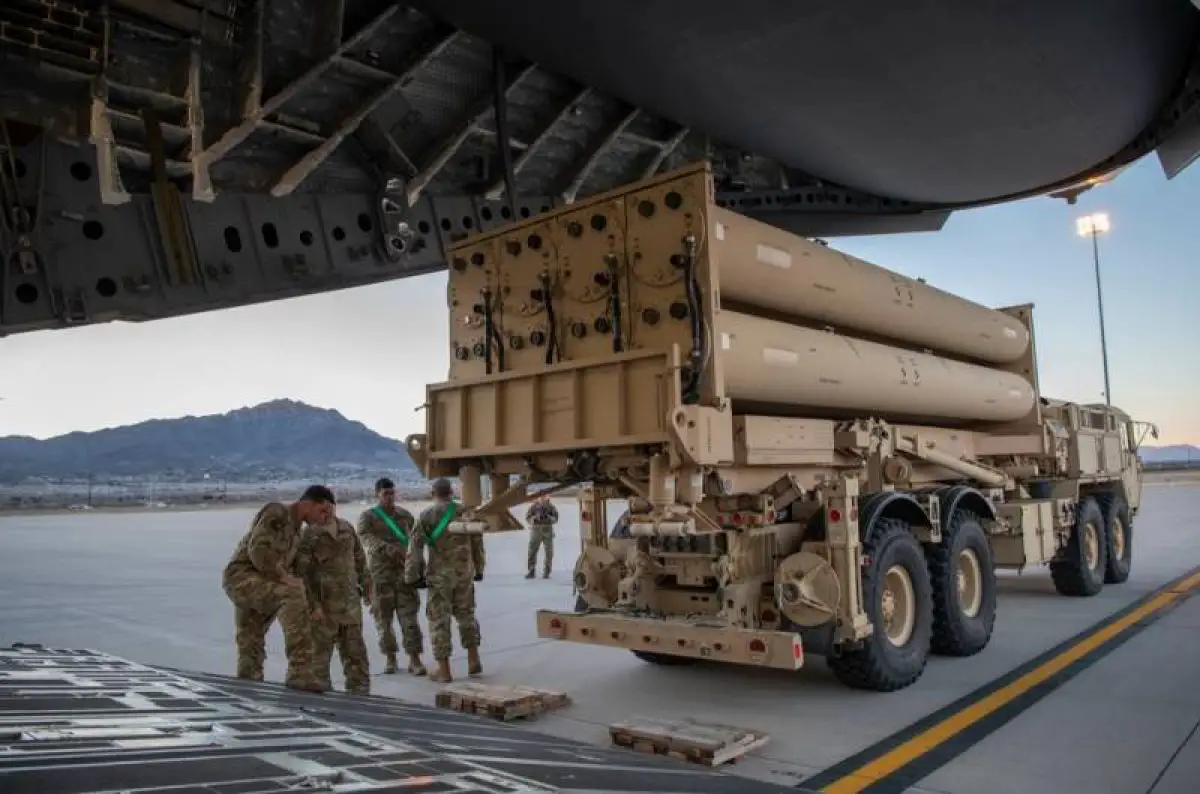
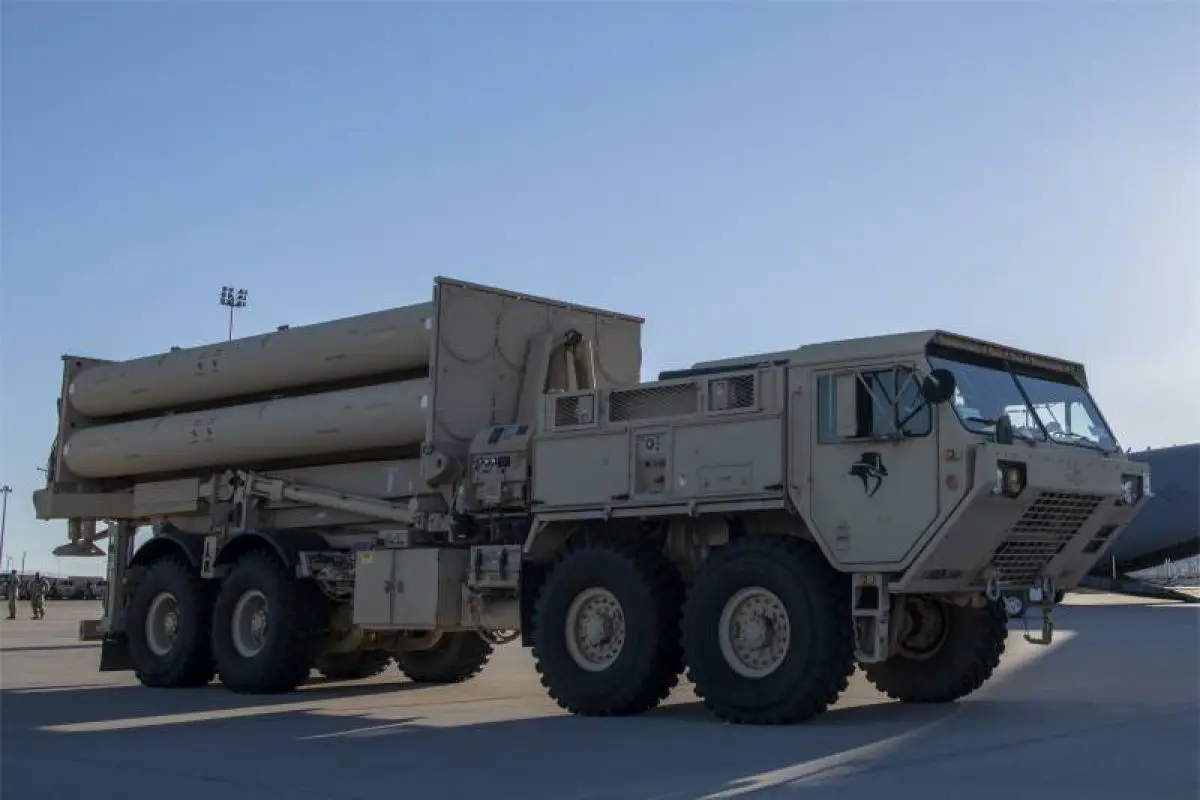
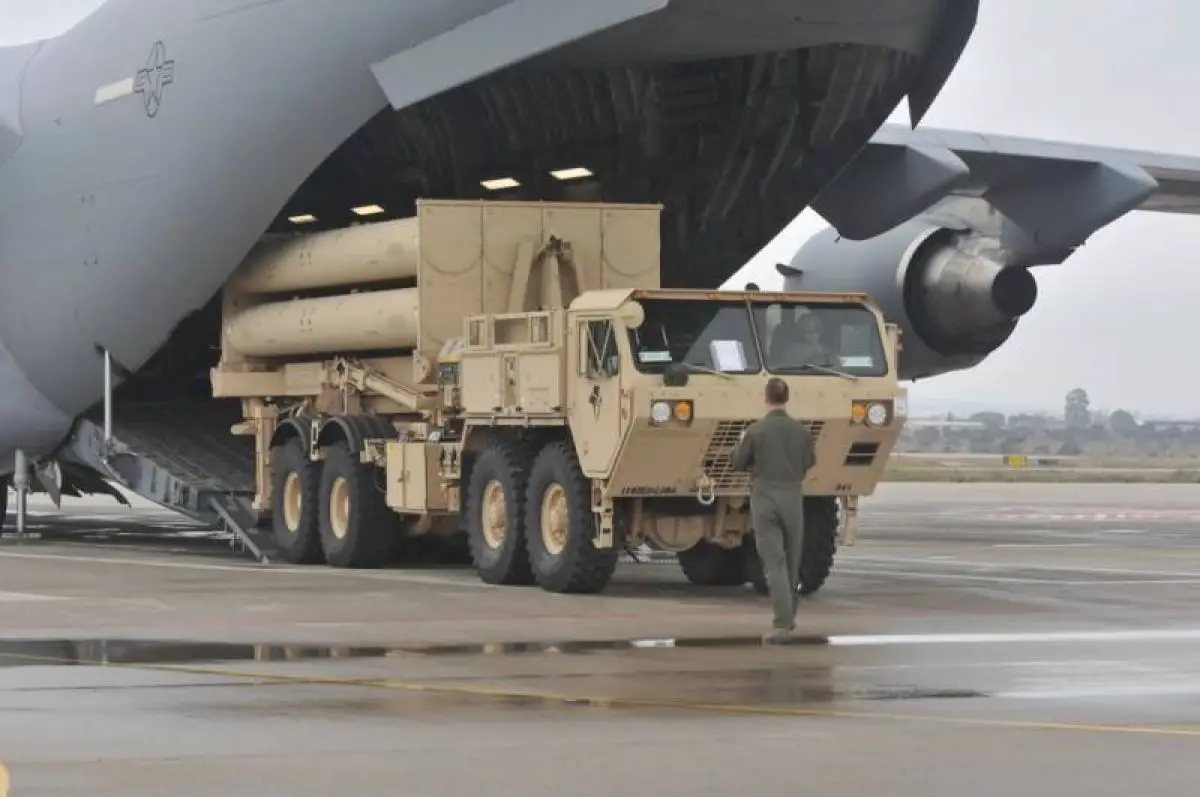
THAAD launcher unit vehicle is a modified Oshkosh Truck Corporation Heavy Expanded Mobility Tactical Truck with Load Handling System (HEMTT-LHS). The 12m-long by 3.25m-wide launch vehicle carries eight missile launch containers. While on the launcher, lead-acid batteries provide the primary power. The batteries are recharged with a low-noise generator.
-
Battery Components
A THAAD battery consists of four main components including up to 9 mobile launcher vehicles with eight missiles ready to fire, one AN/TPY-2 surveillance X-band radar used to search, track, and discriminate objects and provides data to the interceptor and fire control and command vehicle that links THAAD components together, and plans and executes intercept solutions.

The THAAD Radar is an X-Band Radar developed and built by Raytheon at its Andover, Massachusetts Integrated Air Defense Facility. It is the world's largest ground/air-transportable X-Band radar. The THAAD Radar and a variant developed as a forward sensor for ICBM missile defense, the "Forward-Based X-Band - Transportable (FBX-T)" radar were assigned a common designator, AN/TPY-2, in late 2006/early 2007. The AN/TPY-2 radar uses a 9.2m² aperture full field of view antenna phased array operating at I and J bands (X-band) and contains 25,344 solid-state microwave transmit and receive modules. The radar has the capability to acquire missile threats at ranges up to 1,000km.
The THAAD Fire Control and Communications (TFCC) component oversees battery operations and relays fire control information to other elements of the joint force. Each system, known as a Tactical Station Group (TSG), incorporates a Tactical Operations Station (TOS) with two operating stations, a Launch Control Station (LCS), which includes wireless datalinks, networking equipment, and fiber optic cable interfaces, and a Station Support Group (SSG) which includes HMMWV-based antenna and cable support vehicles. -
Combat Use
The Terminal High Altitude Area Defense (THAAD) element provides the Ballistic Missile Defense System (BMDS) with a globally-transportable, rapidly-deployable capability to intercept and destroy ballistic missiles inside or outside the atmosphere during their final, or terminal, phase of flight. The THAAD missile is capable of shooting down a ballistic missile both inside and just outside the atmosphere. The missile is highly effective against ballistic missile threats and uses hit-to-kill technology whereby kinetic energy destroys the incoming warhead. The high-altitude intercept mitigates the effects of enemy weapons of mass destruction before they reach the ground.
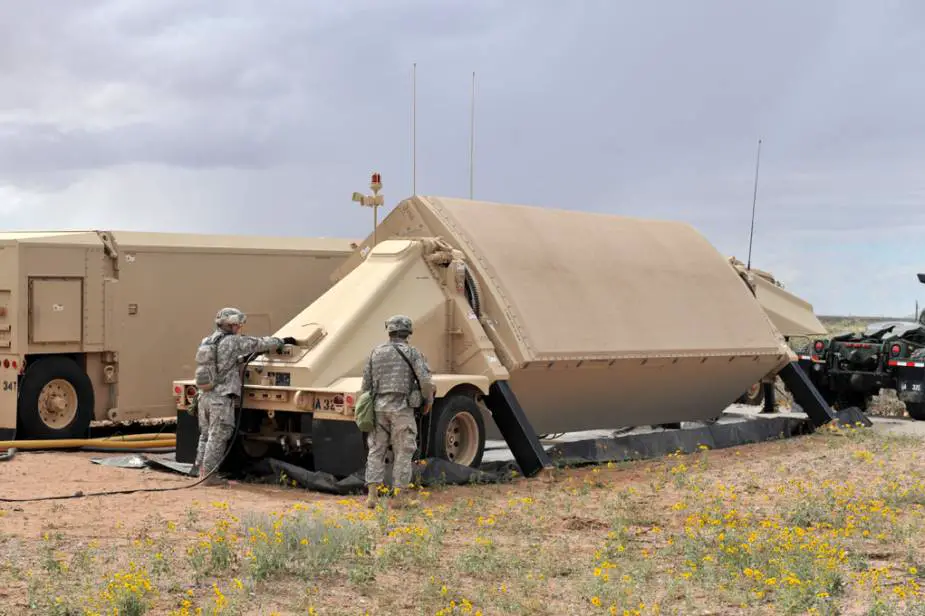
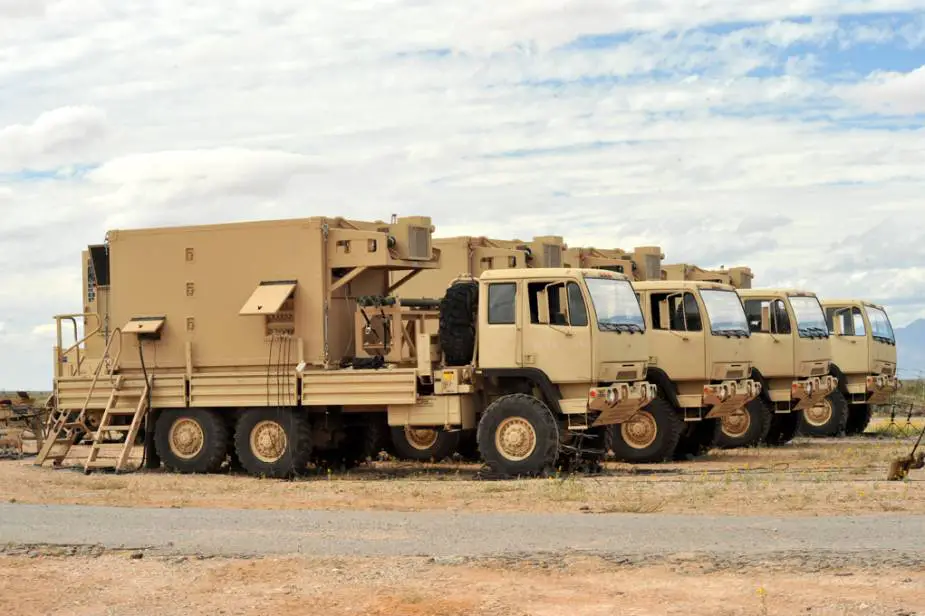
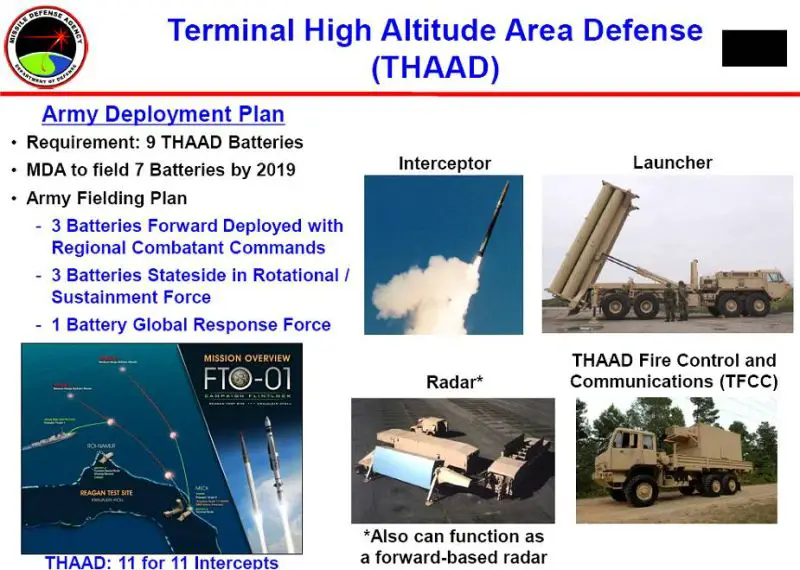

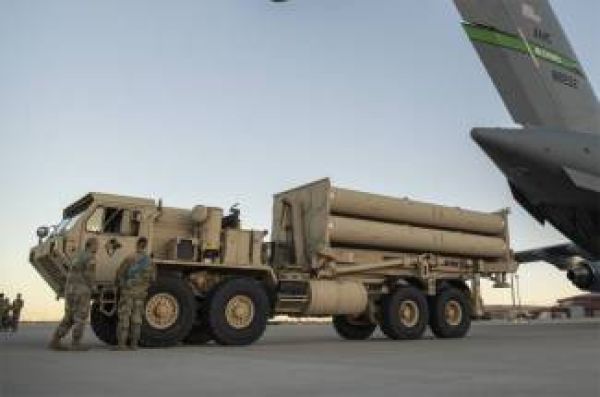
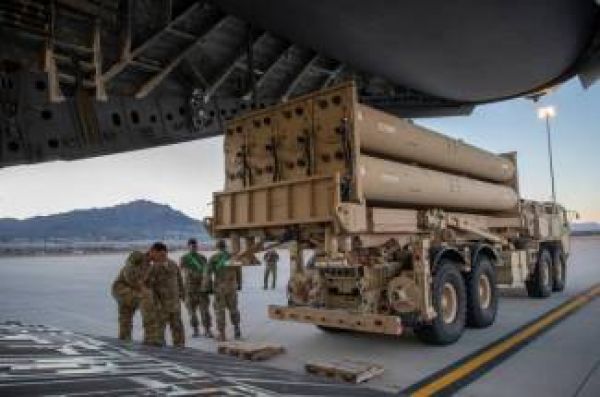
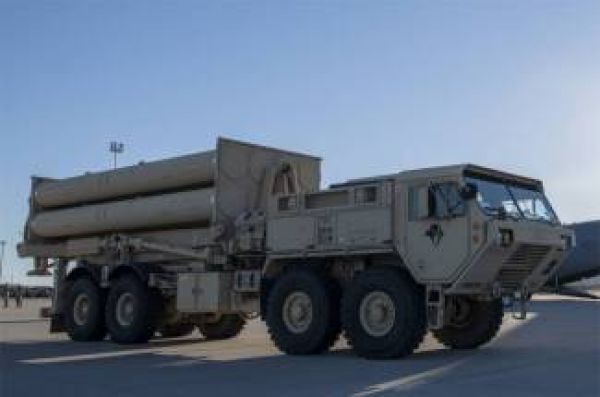
Photo Gallery